
Key Takeaways
- Dry your hands, the jar, and the lid before trying to open it.
- Start with a rubber glove, silicone mat, or other non-slip grip.
- If an unopened jar is vacuum-sealed, releasing the seal gently is usually more effective than twisting harder.
- Warm water can loosen a metal lid and soften dried food around the threads.
- Do not open or eat food from an unopened jar that is cracked, leaking, bulging, or no longer properly sealed.
A stuck jar lid is usually caused by poor grip, a strong vacuum seal, or dried food around the threads. The safest approach is to begin with the least forceful method and move to another technique only when necessary.
Avoid sharp knives, hard impacts, and excessive force. These approaches can cause hand injuries or break the glass.
Check the Jar Before You Open It
Inspect an unopened jar before trying to loosen the lid.
Do not use the food if:
- The glass is cracked or chipped.
- The lid is loose, raised, leaking, or bulging.
- The container looks damaged or unusual.
- Liquid or foam spurts out when the jar is opened.
- The food is moldy, discolored, foamy, or smells unusual.
Do not taste questionable food to decide whether it is safe. Harmful contamination is not always visible and may not produce an unusual smell.
For home-canned food, a tight seal does not prove that the contents were processed safely. Only eat home-canned food when you know that a current, tested canning method was followed.
How to Open a Jar Quickly
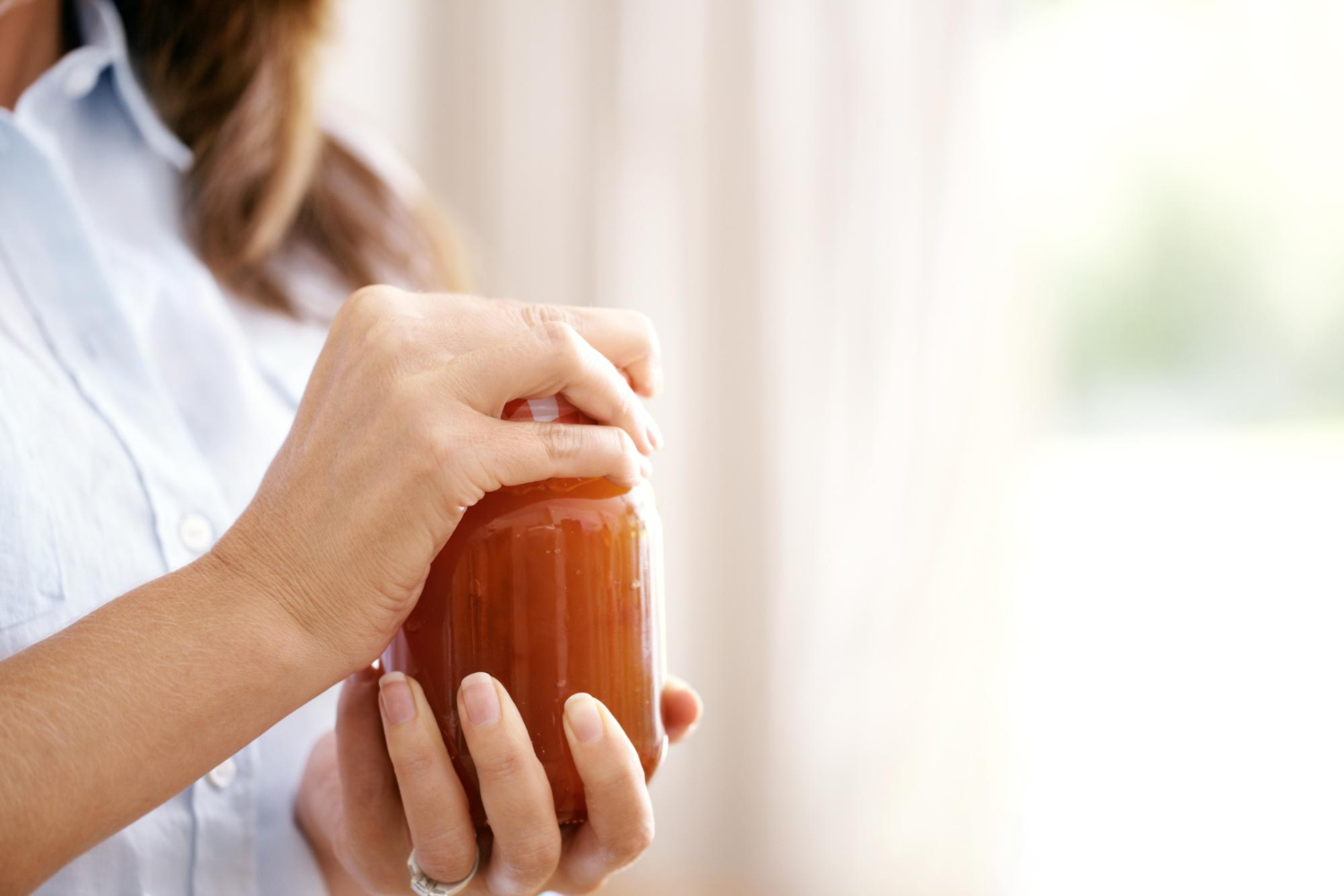
Place the jar upright on a dry, stable surface. Hold the jar near the top with your non-dominant hand, but do not squeeze the glass.
With your dominant hand, turn the lid counterclockwise. Most standard screw-top jars open in this direction.
If the lid does not move, stop applying additional force. Twisting harder can strain your hand or cause the jar to slip. Try the following methods in order.
Five Ways to Open a Stuck Jar
1. Improve Your Grip
Wash away oil, sauce, or other food residue. Dry your hands, the lid, and the outside of the jar completely.
Place one of the following around the lid:
- A rubber cleaning glove
- A wide rubber band
- A silicone trivet
- A non-slip shelf liner
- A purpose-made jar grip
Hold the jar close to the lid and twist counterclockwise.
This is the best place to start because it increases friction without damaging the lid or glass.
2. Release the Vacuum Seal
An unopened jar may be difficult to open because the pressure outside the jar is greater than the pressure inside it.
A jar key or purpose-made seal-breaking tool offers the most controlled way to let air enter. Place the tool beneath the outer edge of the metal lid and apply gentle upward pressure until the seal releases.
If you do not have a jar key, you can carefully use the rounded edge of a sturdy metal teaspoon:
- Place the spoon beneath one small section of the outer lid edge.
- Apply very light upward pressure.
- Stop when you hear air enter or notice that the lid has loosened.
- Remove the spoon and twist the lid normally.
Do not force the spoon deeply beneath the lid. Stop immediately if the lid bends significantly or the glass begins to chip.
3. Run Warm Water Over the Lid
Angle the jar so warm running water flows over the metal lid for about 30 seconds.
Keep the water warm rather than boiling. Avoid exposing a very cold glass jar to a sudden, extreme temperature change.
Dry the lid thoroughly with a towel. Use the towel for additional grip and try turning the lid again.
Warm water may slightly expand the metal and soften sticky food around the lid.
4. Tap Gently Around the Lid
This method works best for a previously opened jar when dried jam, syrup, sauce, or another sticky food is holding the lid in place.
Use the handle of a wooden spoon to tap gently around the side of the metal lid. Rotate the jar as you tap, then try opening it again.
Do not hit the glass, strike the bottom of the jar, or bang the jar against a countertop. Hard impacts can chip or break the glass.
Tapping may help loosen dried residue, but it is not a guaranteed way to release a strong vacuum seal.
5. Use a Jar Opener
A manual, mounted, or automatic jar opener is often the safest and easiest choice for someone with:
- Arthritis
- Hand or wrist pain
- An injury
- Limited grip strength
- Reduced hand mobility
Choose an opener that holds the jar and lid securely. Follow the manufacturer’s instructions and stop if the movement causes pain.
Do not force your wrist through a painful twisting motion.
Which Jar-Opening Method Should You Try?
| Problem | Best method to try first |
| Your hands keep slipping | Rubber glove, silicone mat, or non-slip grip |
| An unopened lid will not move | Warm the lid, then gently release the vacuum |
| A previously opened jar feels sticky | Warm water or light tapping around the lid |
| The lid is too large to grip comfortably | Manual or automatic jar opener |
| You have hand pain or limited grip strength | Mounted, manual, or automatic opener |
| The unopened jar is cracked, leaking, or bulging | Do not open or use it |
What Should You Avoid?
Do not use a sharp knife to pry open a jar. A knife can slip, cut your hand, damage the lid, or chip the glass.
You should also avoid:
- Hitting the jar against a countertop
- Striking the bottom of the jar
- Pouring boiling water over cold glass
- Holding the jar with wet or greasy hands
- Squeezing the glass while applying strong force
- Continuing to twist when your hand or wrist hurts
If none of the safe methods works, ask someone for assistance or use a purpose-made opener.
Frequently Asked Questions
Why does a jar lid become tighter after refrigeration?
Cold temperatures can make the lid feel tighter, while dried sauce, jam, or syrup around the threads may cause it to stick. Run warm water over the metal lid, dry it thoroughly, and try again with a rubber grip.
Can I reuse a bent jar lid?
A bent lid may no longer close securely. Transfer the remaining food to a clean container with a tight-fitting lid and store it according to the product’s refrigeration instructions.
What type of jar opener is best for weak hands?
A mounted or automatic jar opener is usually the easiest option for people with arthritis, hand pain, or limited grip strength. Choose a model that holds both the jar and lid securely without requiring strong wrist movement.
Can children help open a jar?
Children can help dry the jar or place a rubber grip around the lid. An adult should handle glass jars, warm water, and any tool used to release the vacuum seal.
Why does tapping work on some jars but not others?
Tapping may loosen dried food around the threads of a previously opened jar. It may not work when a strong vacuum seal is the main reason the lid is stuck.
What should I do if the jar still will not open?
Stop applying more force, as the jar could slip or break. Use a purpose-made jar opener, ask another person for help, or return the unopened product if the lid appears defective.