
Key Takeaways
- Use this method only for gel polish that is specifically labeled soak-off.
- Use 100% acetone unless the product manufacturer recommends a different remover.
- Never peel, pick, or forcefully scrape gel polish from the natural nail.
- Protect the surrounding skin and keep acetone away from flames, sparks, cigarettes, and heat.
- Ask a nail professional to remove hard gel, file-off builder gel, extensions, or an unknown product.
Soak-off gel polish is designed to last longer than ordinary nail polish, which also makes it more difficult to remove. The safest general approach is to soften the coating with acetone and gently wipe away only the product that releases easily.
Peeling, picking, or aggressively filing gel can remove layers from the natural nail. The American Academy of Dermatology recommends using acetone, protecting the surrounding skin, and wiping softened gel away with a warm, wet washcloth rather than forcing it off with a tool.
This guide covers soak-off gel polish on natural nails. It does not cover acrylic nails, dip powder, hard gel, file-off builder gel, or most gel extensions.
Before You Start: Make Sure the Gel Is Soak-Off
Check the bottle, packaging, salon receipt, or manufacturer’s instructions before beginning. Many gel polish systems are soak-off, but gel products do not all use the same removal method.
Builder gel is particularly variable. Some builder gels can be soaked off with acetone, while others must be filed down. Even different formulas within the same brand may require different removal methods.
Do not continue with acetone removal when:
- The product is labeled hard gel or file-off.
- You have thick extensions or a structured builder-gel overlay.
- You do not know what product was applied.
- The coating remains hard and unchanged after repeated wrapping.
In these situations, professional removal is the safest option.
What You Need
Use acetone in a well-ventilated area. Keep it away from flames, lit cigarettes, pilot lights, sparks, curling irons, heating pads, and other heat sources. Do not heat acetone. Nail products should be used with adequate ventilation, and acetone is classified as a highly flammable liquid.
Acetone can also damage some countertops, sinks, furniture finishes, and plastics. Protect the work surface with plastic sheeting or food wrap covered by a thick towel.
| Item | Purpose |
| 100% acetone | Softens soak-off gel polish |
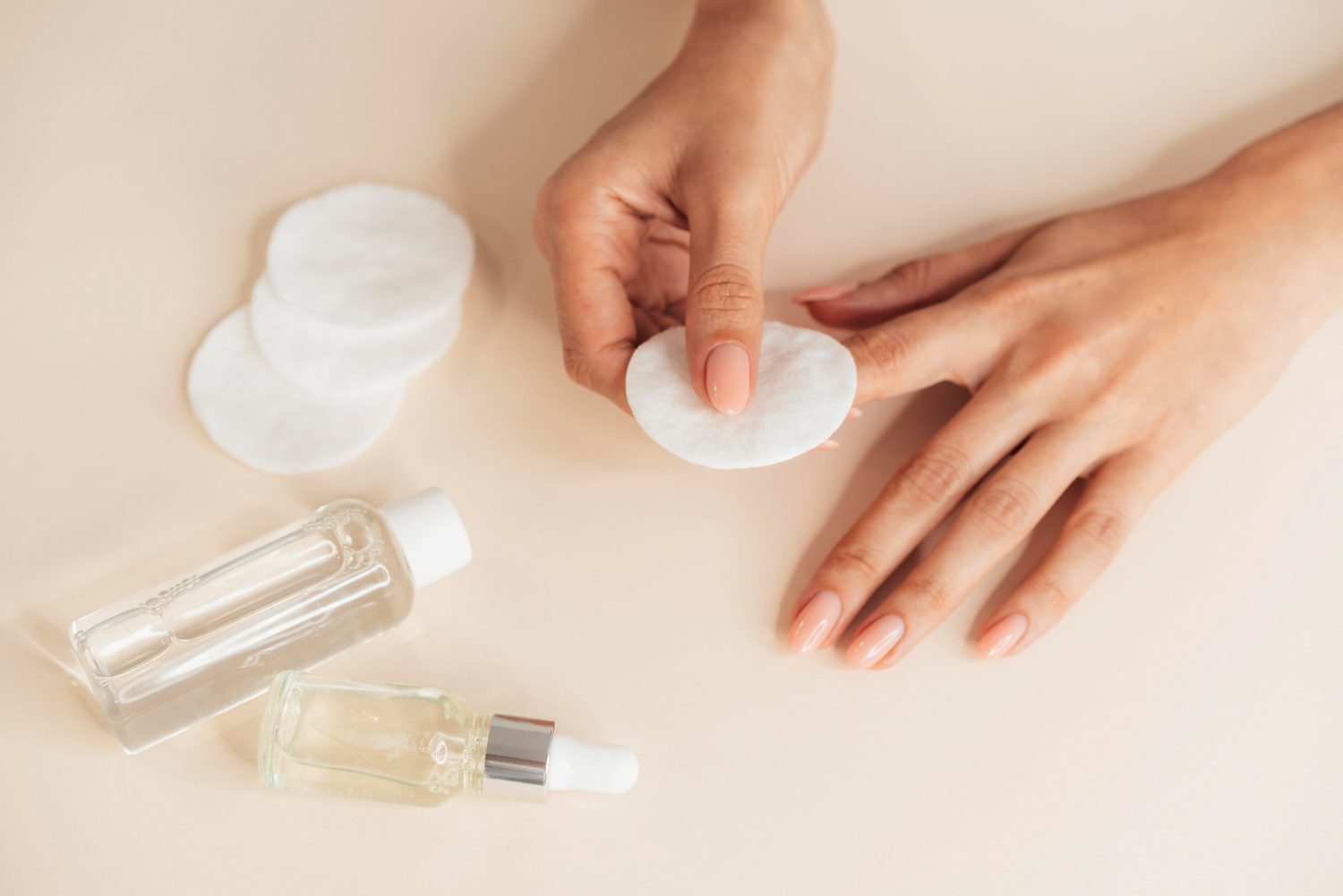
| Cotton balls or cotton pads | Holds acetone against each nail |
| Plastic food wrap | Keeps the cotton in place and limits dripping |
| Petroleum jelly | Helps protect the cuticles and surrounding skin |
| Scissors | Cuts the cotton and wrap to the correct size |
| Warm, damp washcloth | Gently wipes away softened gel |
| Mild or fragrance-free soap | Removes acetone after the process |
| Petroleum jelly or fragrance-free moisturizer | Rehydrates dry skin and cuticles |
| Plastic sheet and thick towel | Protects the work surface |
Avoid gel removers that promise instant bubbling or peeling but do not provide a complete ingredient list, clear manufacturer information, and adequate safety instructions. The U.S. Food and Drug Administration has found methylene chloride in several products marketed as gel nail polish removers. Methylene chloride is prohibited in cosmetics under U.S. FDA regulations.
How to Remove Gel Nail Polish Step by Step
1. Wash and Dry Your Hands
Wash your hands with mild soap and dry them thoroughly. Remove rings or other jewelry that could come into contact with acetone.
Work on one hand at a time so that your other hand remains free to apply and remove the wraps.
2. Protect the Skin Around Each Nail
Apply a thin layer of petroleum jelly to the cuticles and the skin surrounding each nail. Try not to spread it over the gel itself, because it may interfere with the acetone reaching the coating.
Cut the cotton into pieces that are approximately the same size as each nail. Smaller pieces reduce unnecessary acetone contact with the skin.
3. Apply the Acetone and Wrap Each Nail
Saturate one piece of cotton with 100% acetone and place it directly over the gel polish.
Wrap the fingertip with a small piece of plastic food wrap so that the cotton remains securely against the nail. The wrap should be snug but not tight enough to cause numbness, throbbing, tingling, or a change in skin color.
Plastic food wrap can form a tighter seal than aluminum foil and may make acetone less likely to drip onto the surrounding skin. Aluminum foil can still be used when plastic wrap is unavailable.
4. Wait and Check One Nail
Follow the removal time stated by the gel manufacturer. If you do not have product-specific instructions, check one nail after 10 minutes.
The softened gel may look cracked, wrinkled, lifted, or loose. If it remains smooth and firmly attached, apply fresh acetone and rewrap the nail for another five minutes.
Do not try to compensate by scraping harder. If repeated wrapping produces little or no change, the product may not be soak-off gel.
5. Gently Wipe Away the Softened Gel
Remove one wrap at a time. Run a clean washcloth under warm water, wring it out, and gently rub the nail.
Properly softened gel should wipe away with light pressure. Rub the nail itself rather than the surrounding skin.
If part of the coating remains firmly attached, apply fresh acetone and rewrap that nail. Do not dig, peel, or force the product off with a metal tool, cuticle pusher, or another fingernail.
6. Wash and Moisturize
After all removable gel has been wiped away, wash your hands with mild or fragrance-free soap and water. Dry them thoroughly.
Apply petroleum jelly or a fragrance-free moisturizer to the nails, cuticles, and surrounding skin. The AAD recommends applying petroleum jelly around the nails daily for seven days to help reduce irritation caused by acetone.
Common Mistakes to Avoid
Do not:
- Peel gel polish when an edge begins to lift.
- Immerse your entire hand in a bowl of acetone.
- Heat acetone or place wrapped nails near a heat source.
- Wrap the fingers tightly enough to affect circulation.
- Use an electric nail drill without professional training.
- Forcefully scrape polish that remains firmly attached.
- Continue when the skin is burning, bleeding, or significantly irritated.
Picking and aggressive removal can contribute to brittle, peeling, cracked, or thinned nails. Gel manicures themselves can also leave nails dry and brittle, particularly when they are worn repeatedly without breaks.
How to Care for Your Nails After Removal
Acetone can temporarily dry the nails, cuticles, and surrounding skin. Apply petroleum jelly or a fragrance-free moisturizer regularly for several days.
Keep the nails short and smooth any rough edges with a fine nail file. Do not buff the entire nail plate simply to remove small marks or unevenness.
If your nails are brittle, thin, peeling, or sore, leave them polish-free while they recover. The AAD suggests taking a break from nail polish for one to two weeks or longer between gel manicures when the nails need time to repair.
When to Get Professional or Medical Help
Choose professional removal when you have:
- Hard gel or file-off builder gel.
- Gel or acrylic extensions.
- A thick structured overlay.
- Damaged, painful, or unusually thin nails.
- An unknown product.
- Gel that does not soften after repeated acetone wraps.
Remove the wraps immediately and wash your hands if you experience burning, significant redness, swelling, bleeding, numbness, or pain.
Contact a healthcare professional or dermatologist if you notice persistent pain, pus, a spreading rash, blistering, unusual discoloration, or a nail lifting away from the nail bed. Nail lifting, swelling, pain, and certain color changes can require medical assessment.
Frequently Asked Questions
Can regular nail polish remover remove gel polish?
Most non-acetone nail polish removers are not strong enough to remove soak-off gel efficiently. Use the remover recommended by the manufacturer. For many soak-off gel systems, this is 100% acetone.
Can I heat acetone to make the process faster?
No. Acetone is highly flammable. Do not microwave it, place it near hot water or a candle, use a heating pad, or expose it to any other flame, spark, or heat source.
Why is one nail not softening?
The cotton may be too dry, the wrap may have a poor seal, or the coating may be thicker on that nail. Apply fresh acetone and rewrap it for another five minutes. If the product still does not soften, it may be a file-off gel.
Is aluminum foil safe to use instead of plastic wrap?
Yes. Both materials can hold acetone-soaked cotton against the nail. The AAD recommends plastic food wrap because it can form a tighter seal and reduce dripping.
What should I do if acetone causes burning?
Remove the wrap immediately and wash the area with mild soap and water. Do not continue if the skin remains painful, swollen, blistered, or significantly red. Seek medical advice if the symptoms persist or worsen.
Can I remove gel polish from my toenails using the same method?
Yes, as long as the product is labeled soak-off. Protect the surrounding skin, cut the cotton to the size of each toenail, and avoid wrapping tightly enough to cause numbness or discomfort.