Key Takeaways
- Stop flushing immediately if the water starts rising.
- Shut off the toilet’s water supply if there is a risk of overflow.
- Use a flange plunger first for most toilet paper and waste clogs.
- Without a plunger, dish soap and hot water may loosen a soft clog.
- Call a plumber if several drains back up or the toilet keeps clogging.
Stop the Toilet From Overflowing
If the water is rising, do not flush again. Turn the water-supply valve behind the toilet clockwise until it stops.
If water continues entering the bowl, remove the tank lid and press the rubber flapper closed. Place old towels around the toilet and remove some water from the bowl with a disposable container if it is close to overflowing.
Wear gloves before handling contaminated water or tools.
Identify the Type of Clog
The best method depends on what is blocking the toilet.
| What you notice | Likely cause | Best first step |
| Water drains slowly | Toilet paper or waste | Use a flange plunger |
| Water stays near the rim | Complete blockage | Shut off the water and remove excess bowl water |
| A toy or solid object was flushed | Foreign object | Use an auger carefully or call a plumber |
| Several drains are backing up | Main drain or sewer problem | Stop using water and call a plumber |
| The toilet clogs repeatedly | Deeper plumbing or flushing problem | Arrange a plumbing inspection |
Do not use dish soap or hot water for toys, wipes, hygiene products, or other solid objects.
How to Unclog a Toilet With a Plunger
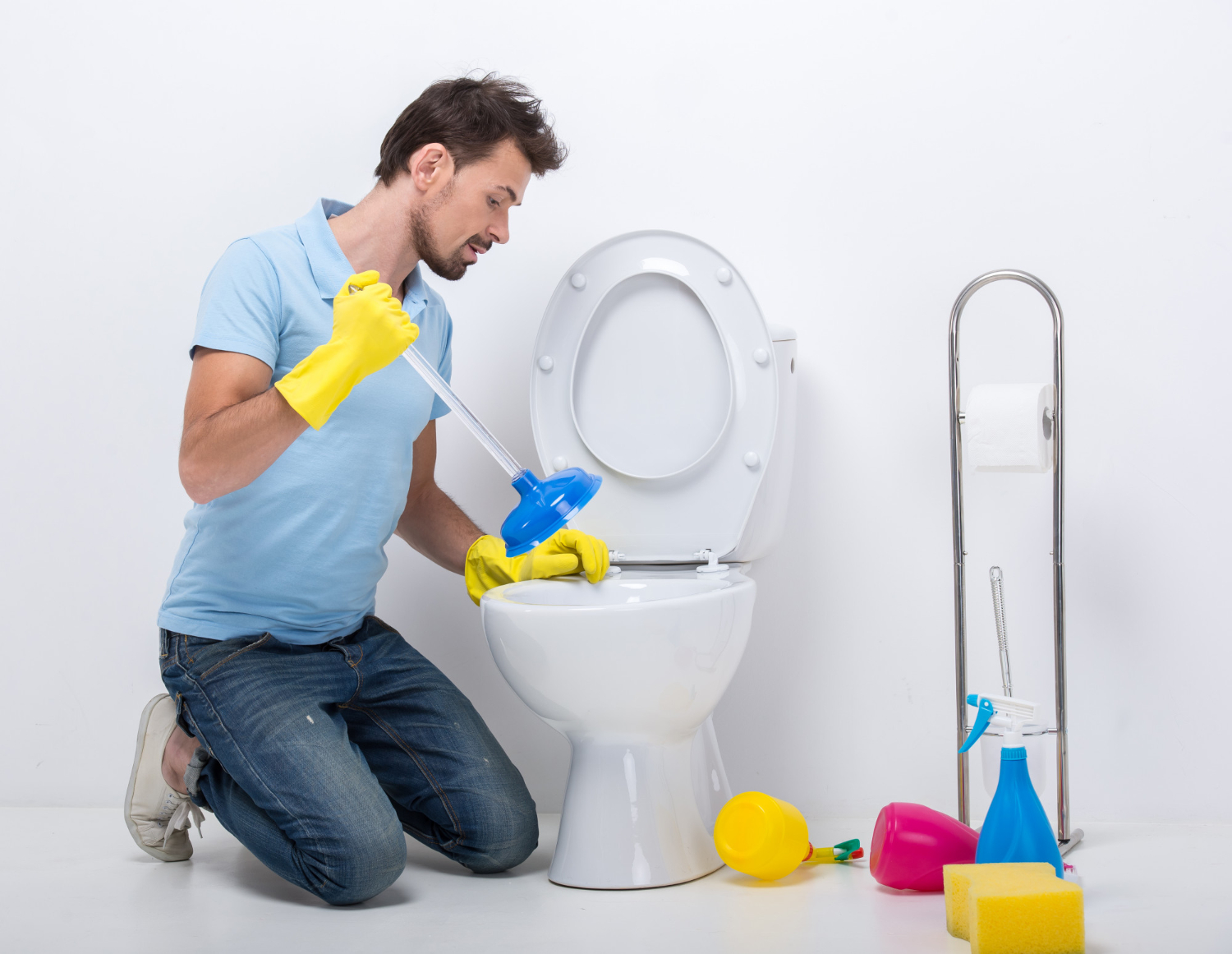
A flange plunger is usually the most effective tool for an ordinary toilet clog.
- Make sure there is enough water in the bowl to cover the rubber part of the plunger.
- Place the flange inside the toilet drain and create a tight seal.
- Push down slowly once to remove trapped air.
- Plunge firmly for 15 to 20 seconds without breaking the seal.
- Repeat two or three times if necessary.
When the water begins to drain, pour a small amount of water into the bowl to test it. Do not perform a full flush immediately if the bowl is still draining slowly.
How to Unclog a Toilet Without a Plunger
Use Dish Soap and Hot Water
This method may help with a soft toilet paper or waste clog.
Pour about half a cup of liquid dish soap into the bowl and wait 10 to 15 minutes. Carefully add hot tap water. Do not use boiling water, as sudden temperature changes may damage porcelain.
Wait another 15 to 20 minutes. If the water level drops, test the toilet with a small amount of water before flushing.
Wait for Toilet Paper to Break Down
A minor toilet paper clog may soften on its own. Wait 30 to 60 minutes if the water level is stable and there is no risk of overflow.
Do not wait if a wipe, hygiene product, toy, or other solid object was flushed.
Use a Toilet Brush
A toilet brush may create enough pressure to move a small clog near the drain opening.
Push and twist the brush gently near the opening. Do not force it deeper or continue if it might become stuck. Clean and disinfect the brush afterward.
Use a Toilet Auger
A toilet auger is useful for stubborn or deeper clogs.
Insert the protected end of the auger into the toilet drain. Turn the handle slowly while feeding the cable forward. When you reach the blockage, rotate the handle gently to break it up or pull it back.
Do not use excessive force, as this may scratch the toilet or push an object deeper into the drain.
What Not to Do
Do not flush repeatedly. This may cause the toilet to overflow.
Do not pour boiling water into the toilet.
Do not mix bleach, vinegar, drain cleaner, toilet cleaner, or other household chemicals. Mixing cleaners can release dangerous fumes.
Avoid ordinary chemical drain cleaners unless the label clearly states that the product is safe for toilets. Chemicals left in the bowl may splash during later plunging or auger use.
Do not use a bare wire hanger. It may scratch the porcelain or push the clog farther into the drain.
How to Know the Toilet Is Unclogged
The toilet is probably clear when:
- Water returns to its normal level.
- A small amount of added water drains quickly.
- The toilet completes one normal test flush.
- No water appears in the shower, bathtub, or nearby sink.
- There is no unusual gurgling from other drains.
Stop testing if the water starts rising again.
When to Call a Plumber
Call a plumber when:
- The toilet remains clogged after plunging or using an auger.
- A toy, wipe, hygiene product, or other solid object is stuck.
- More than one toilet or drain is backing up.
- Water appears in the bathtub or shower when the toilet is flushed.
- The toilet clogs repeatedly.
- Sewage odors or wastewater appear inside the home.
- Water leaks from around the base of the toilet.
Several blocked fixtures may indicate a problem with the main drain, sewer line, plumbing vent, or septic system.
How to Prevent Future Toilet Clogs
Flush only human waste and toilet paper. Do not flush wipes, paper towels, cotton pads, diapers, dental floss, cat litter, or hygiene products.
Use smaller amounts of toilet paper when necessary. Keep the toilet lid closed around young children, and store a flange plunger where it can be reached quickly.
Recurring clogs should be inspected instead of treated repeatedly as separate problems.
Frequently Asked Questions
How long should I plunge a clogged toilet?
Plunge for 15 to 20 seconds at a time while keeping a tight seal over the drain. Repeat the process two or three times, then check whether the water begins to drain.
Why does the toilet water rise and then slowly go down?
This usually indicates a partial blockage. Water can still pass through the drain, but much more slowly than normal. A flange plunger is usually the best first step.
Why is my plunger not working?
The plunger may not be forming a complete seal. Make sure the rubber flange is inside the drain opening and that enough water covers the plunger cup. Push down slowly at first to remove trapped air.
Can I use the toilet immediately after clearing the clog?
Test it first by pouring a small amount of water into the bowl. If the water drains normally, perform one test flush and watch the water level carefully.
What should I do if something valuable falls into the toilet?
Do not flush. Put on gloves and remove the item by hand if it is visible and easy to reach. If it has moved into the toilet trap, use a toilet auger carefully or contact a plumber.