Key Takeaways
- Bake bacon at 400°F (205°C) in a conventional oven or about 375°F (190°C) in a convection oven.
- Always use a rimmed metal baking sheet to contain the rendered fat.
- Arrange the bacon in a single layer without overlapping the slices.
- Begin checking thin-cut bacon at 9 minutes, regular bacon at 12 minutes, and thick-cut bacon at 16 minutes.
- Bacon normally does not need to be flipped, but rotating the pan can help if your oven has hot spots.
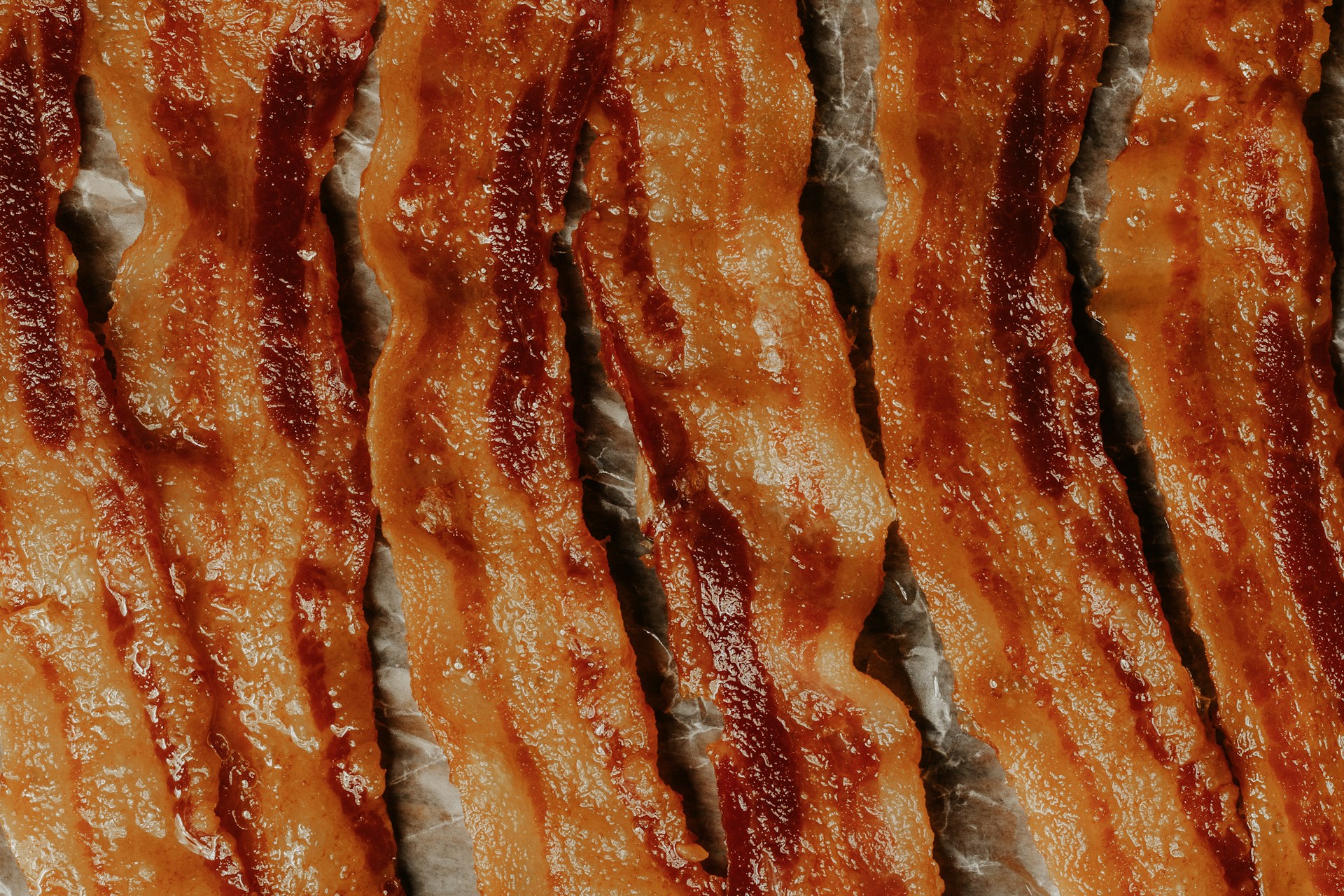
Cooking bacon in the oven is an easy, mostly hands-off way to prepare an entire batch at once. Arrange the slices on a lined, rimmed baking sheet and bake them at 400°F (205°C) until they are browned and as crisp as you prefer.
Regular-cut bacon generally takes 12–16 minutes, while thick-cut bacon often needs 16–22 minutes. These times are estimates, so begin checking early and use the bacon’s appearance and texture to determine when it is ready.
What You Need
You will need:
- Sliced bacon
- A rimmed metal baking sheet
- Parchment paper or aluminum foil
- Tongs
- A paper-towel-lined plate
- An oven-safe wire rack, if desired
Do not use a rimless cookie sheet. Rendered bacon fat can flow over the edge and spill into the oven.
Parchment paper and aluminum foil both work. Parchment helps reduce sticking, while foil can make grease cleanup easier. Trim or fold the lining so it remains inside the pan’s rim and does not extend toward the oven’s heating elements.
How to Cook Bacon in the Oven
- Preheat the oven.
Heat a conventional oven to 400°F (205°C) and place a rack in the middle. For a convection or fan oven, use approximately 375°F (190°C) and begin checking the bacon earlier. - Prepare the baking sheet.
Line a rimmed metal baking sheet with parchment paper or aluminum foil. - Arrange the bacon.
Lay the slices in a single layer. They may touch slightly, but they should not overlap. - Bake the bacon.
Bake until the fat has rendered and the bacon is golden brown. Begin checking a few minutes before the low end of the suggested cooking range, particularly when using thin-cut, maple-flavored, or sugar-cured bacon. - Rotate the pan when necessary.
Bacon normally does not need to be flipped. If one side of the pan is browning faster, rotate the entire baking sheet halfway through cooking. - Drain the bacon.
Transfer the finished slices to a paper-towel-lined plate. Use tongs that have not touched raw bacon, or wash the tongs before reusing them. - Cool the pan safely.
Place the baking sheet on a heat-resistant surface and allow the grease to cool before moving or pouring it. The bacon will become slightly crisper as it cools.
Follow any additional cooking or handling instructions printed on the bacon package.
How Long to Cook Bacon in the Oven
Cooking time depends on the thickness and sugar content of the bacon, its starting temperature, the number of slices, the baking-sheet material, and the accuracy of the oven.
Use the following times as a guide rather than relying only on a timer.
| Bacon type | Start checking | Typical cooking time | Signs it is ready |
| Thin-cut | 9 minutes | 10–14 minutes | Brown edges and a crisp center |
| Regular-cut | 12 minutes | 12–16 minutes | Golden surface with actively bubbling fat |
| Thick-cut | 16 minutes | 16–22 minutes | Deep browning with a crisp exterior and some chew |
Smaller batches may cook more quickly. Remove individual slices as they finish if some pieces are thicker than others.
Should You Use a Wire Rack?
Bake bacon directly on the lined pan when you want crisp edges with a slightly chewy center. This is also the simplest method to prepare and clean up.
For slightly drier, less greasy bacon, place an oven-safe wire rack inside the rimmed baking sheet and arrange the slices on top. The rack allows rendered fat to drip away from the bacon, although it adds another item to clean.
Make sure the rack is specifically labeled oven-safe and fits securely inside the baking sheet.
Common Problems and Solutions
The bacon is still chewy
Return it to the oven for another one or two minutes. Check it frequently because bacon can change from chewy to overcooked quickly.
Some slices are cooking faster than others
Rotate the baking sheet. Uneven slice thickness, overlapping pieces, and oven hot spots can all cause inconsistent browning. Remove finished slices while the remaining pieces continue cooking.
The edges burn before the center becomes crisp
Begin checking sooner or reduce the oven temperature to 375°F (190°C). Thin bacon and bacon containing maple syrup, honey, or added sugar may brown especially quickly.
The bacon sticks to the lining
Allow it to cook a little longer before trying to lift it. Properly browned bacon often releases more easily than undercooked bacon.
The bacon is smoking
Check that the pan lining is inside the rim and away from the heating elements. Reduce the oven temperature slightly when cooking heavily sugared bacon. Do not place bacon under the broiler.
How to Store or Discard Bacon Grease
To save bacon grease, allow it to cool until it is safe to handle but still liquid. Strain it through a fine-mesh strainer into a clean, heat-safe container. Cover the container and refrigerate it.
To discard the grease, pour the cooled grease into a disposable heat-safe container. Allow it to solidify, seal the container, and place it in the trash.
Never pour bacon grease down the sink or toilet. The fat can cool and accumulate inside plumbing.
How to Store and Reheat Cooked Bacon
Allow the bacon to cool, place it in a sealed container, and refrigerate it within two hours of cooking. If the surrounding temperature is above 90°F (32°C), refrigerate it within one hour.
Use refrigerated cooked bacon within three to four days or freeze it for longer storage. These limits follow USDA and FoodSafety.gov guidance for cooked leftovers.
Reheat the bacon on a baking sheet at 350°F (175°C), in a dry skillet over medium-low heat, or briefly in the microwave between paper towels.
Frequently Asked Questions
Can I cook bacon in advance for a large breakfast?
Yes. Cook the bacon until it is slightly less crisp than desired, drain it, and refrigerate it promptly. Reheat it at 350°F (175°C) until it is hot and crisp. Use refrigerated cooked bacon within three to four days.
Does bacon need to come to room temperature before baking?
No. Bacon can go directly from the refrigerator to the oven. Very cold slices may take slightly longer, so use the suggested times only as a guide.
Why is my oven-baked bacon smoking?
The temperature may be too high, the bacon may contain a sugary coating, grease may have spilled outside the pan, or the lining may be too close to a heating element. Reduce the temperature to 375°F (190°C), keep the lining inside the rim, and avoid using the broiler.
Can I bake bacon in a glass dish?
You can use a dish that is specifically labeled oven-safe, but a rimmed metal baking sheet is preferable because it heats and browns more predictably. Follow the manufacturer’s instructions for any glass cookware.
How much bacon can I place on one baking sheet?
Place only as many slices as will fit in one layer without overlapping. The number will depend on the size of the baking sheet and the bacon slices. Use a second pan rather than crowding the first.
Can I cook frozen bacon in the oven?
Thawing it first is preferable because separated slices cook more evenly. Bacon can be thawed safely in the refrigerator, in cold water, or in the microwave. Do not thaw it on the counter. Bacon thawed in cold water or the microwave should be cooked promptly.