- Trim the tough ends before cooking asparagus.
- Dry the spears well if you want them to brown.
- Thin asparagus cooks faster than thick asparagus.
- Roast asparagus at 425°F (220°C) for an easy, reliable result.
- Asparagus is ready when it is tender but still slightly firm.
Asparagus is quick and easy to cook. You can roast, sauté, steam, boil, grill, or air-fry it, depending on the texture and flavor you prefer.
For most people, roasting is the easiest method. It creates lightly browned edges while keeping the stalks tender.
How to Prepare Asparagus
Rinse the asparagus under cold water, then dry it well.
Cut off approximately 1–2 inches from the bottom of each stalk. This removes the tough, woody part that can remain stringy after cooking.
Thin and medium asparagus usually does not need peeling. Very thick stalks can be peeled around the lower third if the skin feels tough.
How Long to Cook Asparagus
Cooking time depends mainly on the thickness of the stalks.
| Cooking method | Temperature | Approximate time |
| Oven roasting | 425°F (220°C) | 8–15 minutes |
| Sautéing | Medium-high heat | 5–10 minutes |
| Steaming | Medium heat | 3–6 minutes |
| Boiling | Boiling water | 2–5 minutes |
| Grilling | Medium-high heat | 5–8 minutes |
| Air frying | 400°F (200°C) | 6–10 minutes |
Start checking thin asparagus at the lower end of each range. Thick spears may need several additional minutes.
How to Roast Asparagus
Roasting is one of the simplest and most flavorful ways to cook asparagus.
- Heat the oven to 425°F (220°C).
- Wash, trim, and dry the asparagus.
- Place it on a baking sheet.
- Add about one tablespoon of olive oil per pound of asparagus.
- Season with salt and black pepper.
- Arrange the spears in one layer.
- Roast for 8–15 minutes, depending on thickness.
The asparagus is ready when the stalks are tender and the tips are lightly crisp. Add lemon juice or grated Parmesan before serving.
How to Cook Asparagus in a Pan
Pan-cooked asparagus is fast and develops lightly browned edges.
Heat one tablespoon of olive oil in a large skillet over medium-high heat. Add the trimmed asparagus and season with salt and pepper.
Cook for 5–10 minutes, turning occasionally. Thin spears may be ready after five minutes, while thick spears may need closer to ten.
If thick stalks begin to brown before becoming tender, add one tablespoon of water and cover the pan for one or two minutes.
Add garlic during the final minute so it does not burn.
How to Steam Asparagus
Steaming is a good choice when you want tender asparagus without added oil.
Bring about one inch of water to a boil in a saucepan. Place the asparagus in a steamer basket above the water and cover the pan.
Steam thin spears for 2–3 minutes and thicker spears for 4–6 minutes.
Remove the asparagus as soon as it becomes tender. Season it with salt, pepper, butter, olive oil, or lemon juice.
How to Boil Asparagus
Bring a wide pan of salted water to a boil. Add the trimmed asparagus and cook for 2–5 minutes.
Drain it immediately when it becomes tender.
If the asparagus will be used in a cold salad, transfer it to ice water after boiling. This stops the cooking process and helps prevent it from becoming too soft.
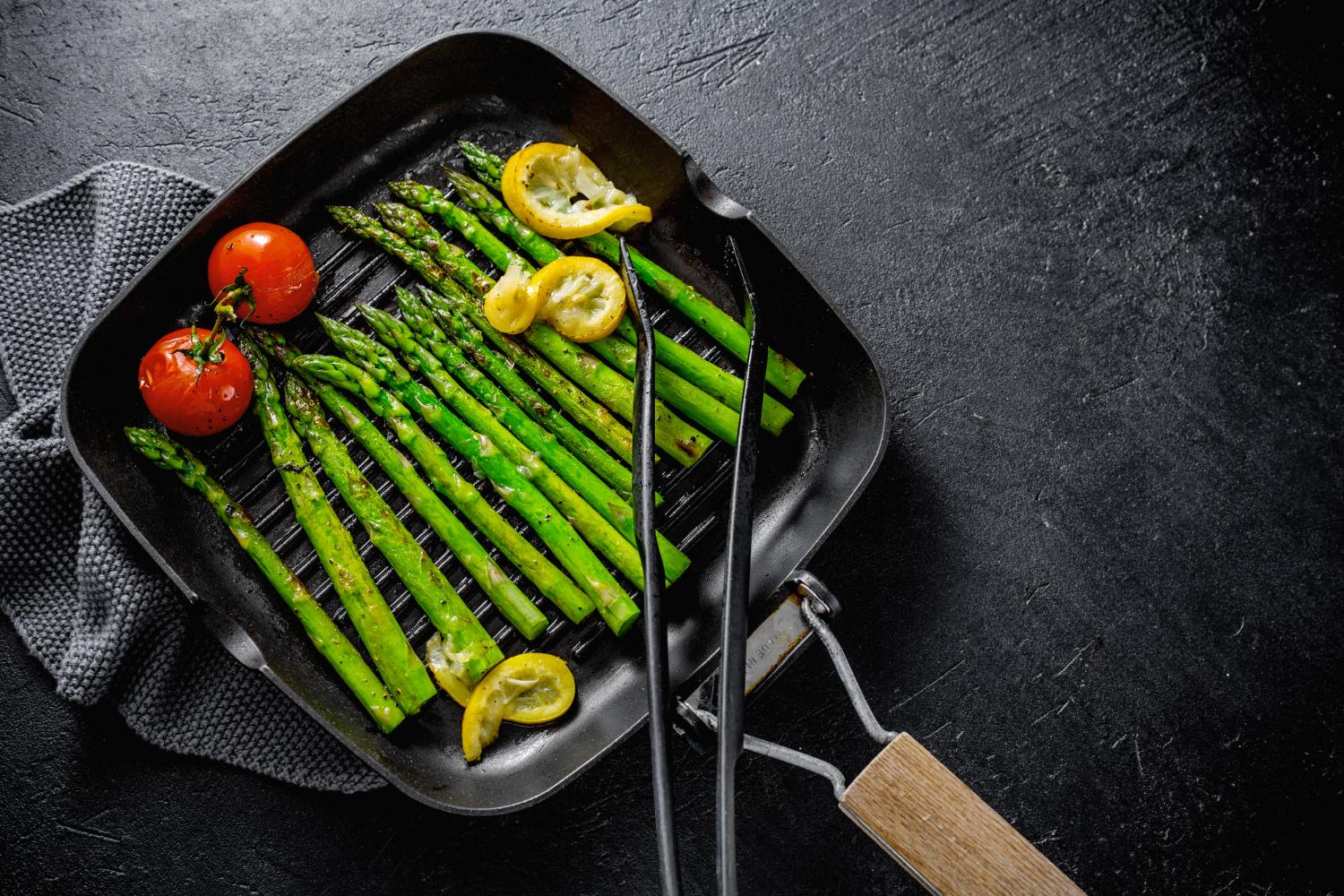
How to Grill Asparagus
Medium and thick spears are best for grilling because thin asparagus can fall through the grates.
Coat the asparagus lightly with olive oil, salt, and pepper. Place it across a hot grill and cook for 5–8 minutes, turning regularly.
Remove it when it has light grill marks and the stalks are tender.
Use a grill basket for thin asparagus.
How to Air-Fry Asparagus
Preheat the air fryer to 400°F (200°C).
Toss the trimmed asparagus with a small amount of olive oil, salt, and pepper. Place the spears in one layer in the basket.
Air-fry for 6–10 minutes, turning or shaking the basket halfway through.
Check thin spears early because they can become dry if overcooked.
How to Tell When Asparagus Is Done
Cooked asparagus should be tender but not mushy.
Insert the tip of a knife into the thickest part of a stalk. It should enter easily but still meet slight resistance.
The stalks should bend gently without collapsing, and the tips should remain intact.
Remove the asparagus from the heat slightly before it reaches your preferred texture because it will continue cooking briefly.
Common Asparagus Cooking Mistakes
Overcooking is the most common mistake. It makes asparagus soft, wet, and dull in color.
Crowding the pan can also prevent browning. Arrange the spears in one layer when roasting, sautéing, or air-frying.
Another common mistake is leaving the woody ends attached. These tough sections do not become pleasant to eat, even after cooking.
Wet asparagus may steam instead of brown, so dry it carefully before using high-heat methods.
Simple Ways to Season Asparagus
Asparagus works well with simple seasonings.
Try olive oil, salt, pepper, and lemon for a fresh flavor. Butter and garlic create a richer result, while Parmesan adds a salty finish.
You can also serve asparagus with fresh herbs, balsamic vinegar, toasted almonds, or a small amount of Dijon mustard.
How to Store Cooked Asparagus
Place leftover cooked asparagus in a sealed container and refrigerate it. Use it within three to four days.
Reheat it briefly in a skillet, oven, or air fryer. Avoid heating it for too long because it can quickly become soft.
Cooked asparagus can also be eaten cold in salads, pasta dishes, or egg dishes.
Frequently Asked Questions
Can you cook asparagus without oil?
Yes. Asparagus can be steamed, boiled, or microwaved without oil. When roasting or grilling, a small amount of oil helps prevent drying and improves browning, but it is not strictly necessary.
Can you cook frozen asparagus?
Yes, although frozen asparagus is usually softer than fresh asparagus. Cook it directly from frozen and avoid thawing it first, as thawing can make it watery. Roasting or air frying generally gives the best texture.
Should asparagus be cooked whole or cut into pieces?
Both options work. Whole spears are ideal as a side dish, while shorter pieces are easier to use in pasta, stir-fries, omelets, and salads. Cut thick stems slightly smaller than the tips so everything cooks evenly.
Can you prepare asparagus in advance?
You can wash and trim asparagus up to a day before cooking. Dry it thoroughly and store it in a sealed container in the refrigerator. For the best texture, cook it shortly before serving.
Why does asparagus sometimes taste bitter?
Asparagus may taste bitter when it is old, overcooked, heavily charred, or paired with burned garlic. Fresh asparagus cooked briefly usually has a mild, slightly sweet flavor.