Key Takeaways
- Keep the lower chopstick still and move only the upper chopstick.
- Hold the upper chopstick similarly to a pencil.
- Align the tips before attempting to pick up food.
- Begin practicing with firm, easy-to-grip foods.
- Use a relaxed grip because squeezing too tightly reduces control.
Using chopsticks may feel difficult at first, but the basic technique is simple: one chopstick stays still while the other moves up and down. Once you can control that movement, you can use chopsticks to pick up vegetables, meat, sushi, noodles, and many other foods.
How to Hold Chopsticks Step by Step
1. Position the Lower Chopstick
Place the first chopstick in the space between your thumb and index finger. Rest its lower section against the side of your ring finger.
This chopstick should remain stable while you eat.
2. Hold the Upper Chopstick
Place the second chopstick above the first. Hold it with your thumb, index finger, and middle finger, much like you would hold a pencil.
The upper chopstick is the one that moves.
3. Align the Tips
Adjust the chopsticks until their narrow ends are level. When you close them, the tips should meet evenly.
If one chopstick extends farther than the other, slide it forward or backward until they are aligned.
4. Practice Opening and Closing
Move your index and middle fingers to raise and lower the upper chopstick. Keep the lower chopstick still.
Practice opening and closing the tips several times before trying to pick up food.
There is no single grip that works perfectly for everyone. Small adjustments are acceptable as long as you can control the chopsticks comfortably without excessive hand strain.
How to Pick Up Food With Chopsticks
Open the chopsticks slightly wider than the piece of food. Position the tips around its center, close them gently, and lift.
Do not squeeze harder than necessary. Excess pressure can break soft foods or cause slippery foods to move out of your grip.
| Type of food | Best technique |
| Vegetables and meat | Grip the piece near its center |
| Sushi | Hold it gently along the sides |
| Noodles | Pick up a small bundle and lift slowly |
| Sticky rice | Pinch a small clump rather than individual grains |
| Tofu | Use light, even pressure to avoid breaking it |
When eating noodles, selecting a small portion is usually easier than trying to lift a large bundle at once.
Common Problems and How to Fix Them
| Problem | Possible cause | Solution |
| The chopsticks cross | Your fingers are moving unevenly | Loosen your grip and realign the tips |
| Food keeps slipping | You are gripping near the edge | Position the tips closer to the food’s center |
| Both chopsticks move | The lower chopstick lacks support | Rest it securely against your ring finger |
| Your hand becomes tired | You are squeezing too tightly | Relax your thumb and fingers |
| The tips do not meet | The chopsticks are uneven | Slide one chopstick forward or backward |
If the chopsticks continue to cross, practice the movement without food. Open and close them ten times while concentrating on keeping the lower chopstick still.
The Best Foods for Practicing
Start with foods that are firm, dry, and large enough to grip easily. Good beginner options include:
- Cubes of bread or cheese
- Sliced vegetables
- Pieces of cooked meat
- Crackers
- Large pasta shapes
Once your control improves, move on to grapes, beans, noodles, tofu, and smaller pieces of food.
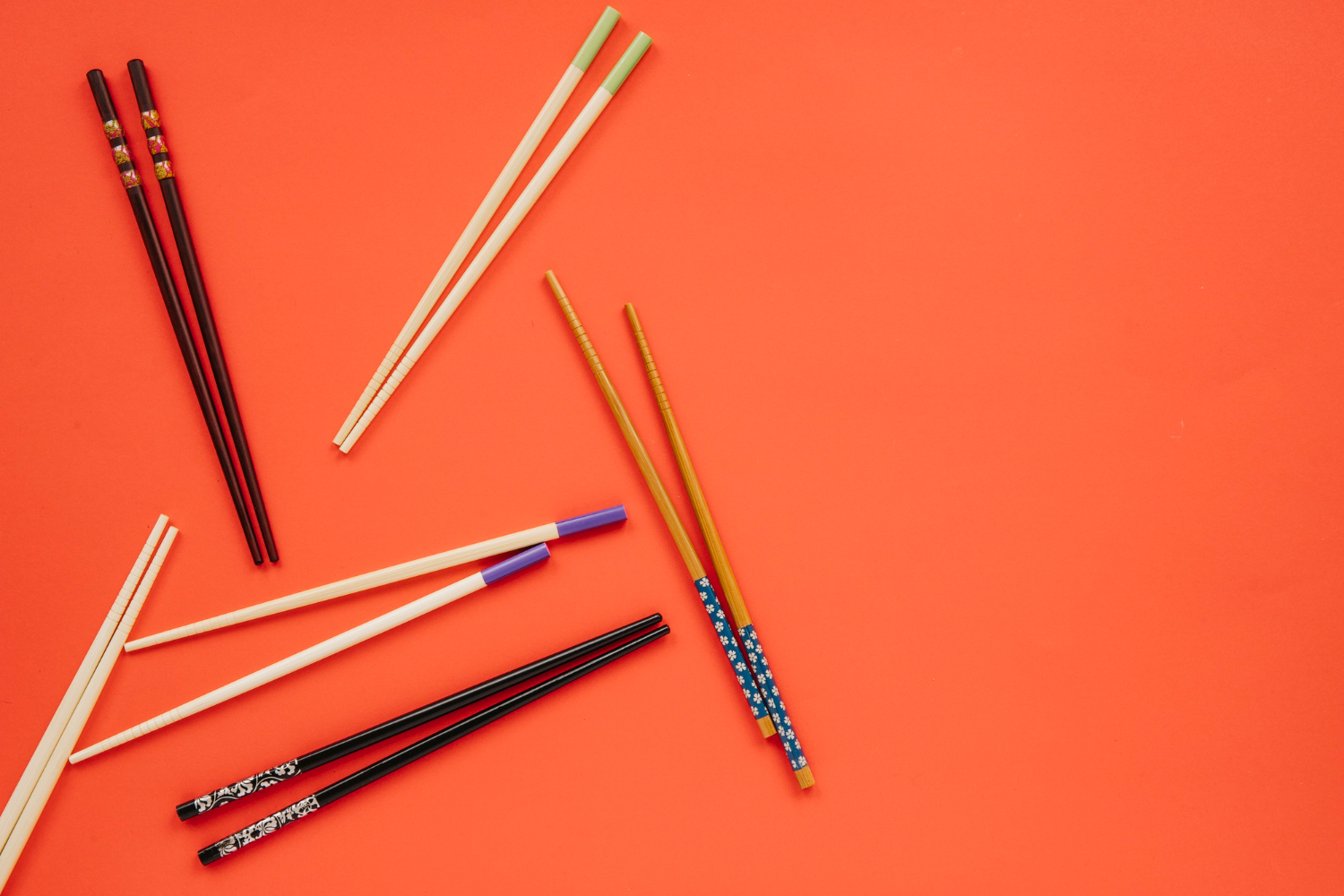
Wooden or bamboo chopsticks are often easier for beginners because their textured surfaces provide more grip than smooth metal or plastic chopsticks.
A simple practice exercise is to place several pieces of food in one bowl and transfer them into another. Practicing for five minutes at a time can help you develop control without tiring your hand.
Basic Chopstick Etiquette
Chopstick etiquette varies between countries, regions, families, and restaurants. However, several practices are generally worth following:
- Do not leave chopsticks standing upright in a bowl of rice.
- Do not point at people with chopsticks.
- Do not pass food directly from your chopsticks to another person’s chopsticks.
- Do not play with chopsticks or use them as drumsticks.
- Use serving chopsticks or serving utensils for shared dishes when provided.
It is also polite to place your chopsticks on the provided chopstick rest when you are not using them. When you are uncertain about local customs, observe the other diners or politely ask.
Frequently Asked Questions
Can left-handed people use chopsticks?
Yes. Left-handed users can follow the same steps with the positions mirrored. You do not need special left-handed chopsticks.
Why do my chopsticks keep crossing?
Chopsticks usually cross when the grip is too tight, the tips are uneven, or both chopsticks are moving. Realign them, relax your hand, and focus on moving only the upper chopstick.
How high should I hold chopsticks?
Hold them around the upper-middle section. Holding them too close to the tips limits your reach, while holding them near the very ends can make them harder to control.
Are training chopsticks helpful?
Training chopsticks can help beginners understand the opening-and-closing motion. They may be particularly useful for children, although practicing with ordinary chopsticks is still important for developing natural finger control.
How long does it take to learn to use chopsticks?
Many beginners can pick up firm foods after a few minutes of practice. Handling noodles, rice, tofu, and slippery foods comfortably may take several meals.
Is there only one correct way to hold chopsticks?
No. The standard grip provides good control for most people, but several variations can work. The most important factors are comfort, control, cleanliness, and respectful table manners.