
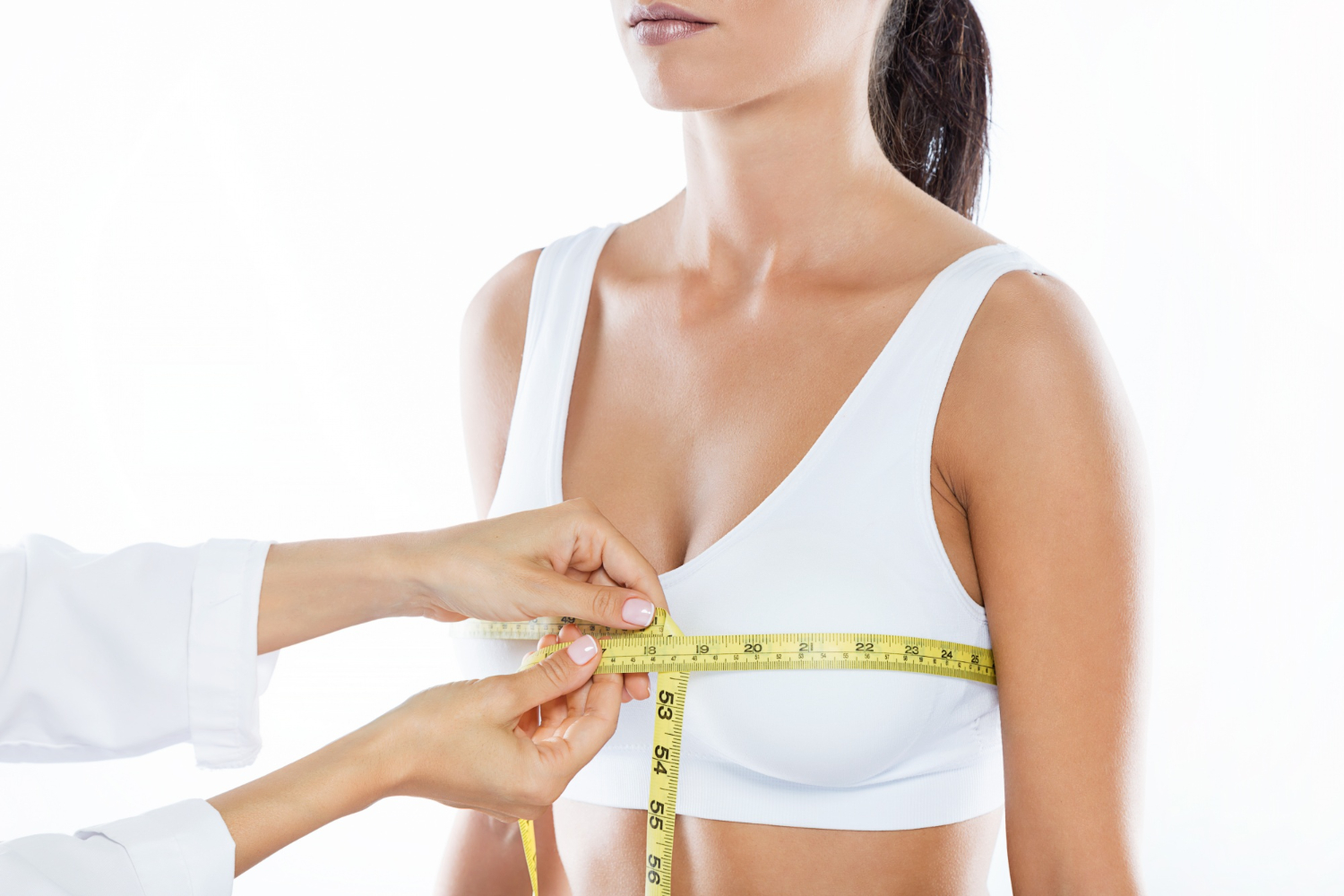
Key Takeaways
- Measure your rib cage immediately beneath your bust to estimate your starting band size.
- Measure around the fullest part of your bust to estimate your cup size.
- Keep the measuring tape level and secure without compressing your breast tissue.
- Check the size chart for the specific brand because bra sizing is not fully standardized.
- Treat your calculated size as a starting point and confirm it with a complete fit check.
Measuring your bra size at home takes only a few minutes. You need two basic measurements: your underbust measurement and your full-bust measurement.
These numbers can help you identify a useful starting size. However, tape measurements cannot account fully for breast shape, asymmetry, fabric stretch, or differences between bra designs. The most reliable result comes from combining your measurements with the manufacturer’s size chart and checking how the bra fits on your body. Major bra retailers similarly recommend measuring beneath the bust and around its fullest point while treating the result as a starting guide.
What You Need to Measure Your Bra Size
You will need:
- A soft fabric measuring tape
- A mirror
- A well-fitting, non-padded bra
- A phone, pencil, or notebook for recording your measurements
Stand upright with your shoulders relaxed. Measure your underbust against bare skin whenever possible. For the full-bust measurement, wear a non-padded bra that supports your breasts without pushing them up, minimizing them, or compressing them.
Avoid measuring over a push-up bra, heavily padded bra, minimizer bra, or compression sports bra because these styles can change the position or shape of your bust.
Step 1: Measure Your Underbust
Wrap the measuring tape around your rib cage immediately beneath your breasts, where the bottom of a bra band normally sits.
Check the following before recording the number:
- The tape is level around your body.
- The tape is not twisted.
- It feels snug and secure but is not painful.
- You can breathe normally without holding your breath.
Record the exact measurement rather than rounding immediately.
Many US and UK bras use even-numbered bands, such as 30, 32, 34, and 36. However, manufacturers do not all convert underbust measurements into band sizes in the same way. Use your exact measurement with the size chart or calculator provided by the brand you intend to buy.
If your measurement falls between two recommended band sizes, try both. The better band should remain level around your body and feel secure without restricting your breathing or movement.
Step 2: Measure Your Full Bust
Place the tape around the fullest part of your breasts, which is often near the nipple line.
Keep the tape parallel to the floor across your back. It should rest lightly against your body without flattening your breasts or creating an indentation.
Record the measurement at its exact point. Do not round it down.
For example, you might record:
- Underbust: 32 inches
- Full bust: 36 inches
If possible, measure twice. A second measurement can help you notice whether the tape was sloping or whether you pulled it more tightly the first time.
Step 3: Estimate Your Cup Size
Many US and UK size charts estimate cup size by comparing the full-bust measurement with the band size. Each additional inch commonly represents another cup step through the smaller cup sizes.
Using the example above:
36-inch full bust − 32-inch band = 4-inch difference
On a chart that assigns a 4-inch difference to a D cup, 32D would be one possible starting size.
| Difference | Common US starting label | Common UK starting label |
| 1 inch | A | A |
| 2 inches | B | B |
| 3 inches | C | C |
| 4 inches | D | D |
| 5 inches | DD or E | DD |
| 6 inches | DDD or F | E |
This table is only an estimate. Cup lettering differs between sizing systems and can also differ between manufacturers. US brands may use combinations such as DD, DDD, E, or F differently, while UK brands commonly follow a sequence that includes D, DD, E, F, and FF. Check the exact chart for the bra you are considering before ordering.
How to Check Whether Your Bra Fits
Before judging the fit, make sure each breast is positioned fully inside its cup. Adjust the straps so that they stay in place without digging into your shoulders.
Then check the following areas:
| Area | Signs of a good fit |
| Band | Sits level around the body and stays in place when you move |
| Cups | Contain the breasts without spilling, cutting in, gaping, or wrinkling |
| Center panel | Lies against the chest in most standard underwired bras |
| Underwire | Surrounds the breast tissue without sitting or pressing on it |
| Straps | Stay in place without digging in or carrying most of the support |
If the band rises at the back, it is probably too loose. Try a smaller band while adjusting the cup size to preserve a similar cup volume.
If breast tissue spills over the top or sides, try a larger cup or a style with more coverage. If the cups wrinkle or gape, try a smaller cup, but also consider a different cup shape. Gaping does not always mean that the cup is too large.
The band should provide most of the bra’s support. Tightening the shoulder straps excessively will not correct a loose band or poorly fitting cups. Current fitting guidance also recommends checking that the band stays level, the cups contain the breasts smoothly, the wires do not rest on breast tissue, and the straps are not doing all the work.
A bra may be the correct numerical size but still feel uncomfortable because its wire width, cup depth, coverage, or overall shape does not suit your body.
How Sister Sizes Work
Sister sizes have approximately the same cup volume but use different band lengths and cup letters.
For example, 32D, 34C, and 36B are sister sizes.
As a general rule:
- Go down one band size and up one cup size.
- Go up one band size and down one cup size.
Suppose the cups of a 34C fit correctly but the band feels too loose. A 32D may provide a firmer band while keeping a similar cup volume.
If the 34C band feels too tight but the cups fit, a 36B may be worth trying.
Sister sizes are best used for small adjustments. Moving several band sizes away from your measured size can change the proportions of the bra, including the strap position and wire width. Different styles may also fit differently even when their labels are sister sizes.
Common Bra-Measuring Mistakes
Avoid these common mistakes:
- Measuring over a padded, push-up, minimizer, or compression bra
- Allowing the tape to slope upward or downward across your back
- Pulling the tape tightly enough to compress your body or breast tissue
- Holding your breath while measuring
- Rounding both measurements too early
- Assuming every brand uses the same sizing chart
- Judging the fit before positioning your breasts fully inside the cups
- Trying to correct a loose band by overtightening the shoulder straps
It is also a mistake to assume that discomfort is something you must tolerate. A bra should feel secure, but wires, straps, and bands should not cause persistent pain, rubbing, or restricted breathing.
Frequently Asked Questions
What should I do if one breast is larger than the other?
Choose a cup that comfortably contains the larger breast. You can tighten the strap slightly on the smaller side, add a removable insert, or choose a bra with stretch fabric that adjusts more easily to asymmetry.
Why does the band feel tight even though I measured correctly?
The band may be too small, but cups that are too small can also make the whole bra feel tight. Compare the measured size with a larger cup, and check whether the bra’s cup shape is suitable for your breasts.
Should the center of every bra lie flat against my chest?
No. The center panel normally rests against the chest in a correctly fitted standard underwired bra. It may not lie flat in wireless bras, some plunge styles, or specialized designs.
When should I measure my bra size again?
Measure again every 6 to 12 months or whenever your body changes noticeably. Pregnancy, nursing, weight changes, hormonal changes, surgery, and aging can all affect how a bra fits. Retailer fitting guidance similarly recommends regular reassessment rather than assuming one size will remain correct indefinitely.
Why does the same size fit differently in another bra style?
Bra styles differ in cup depth, wire width, coverage, padding, seam placement, and fabric stretch. Your breast shape also affects which designs fit best. A full-cup bra, plunge bra, balconette bra, and molded T-shirt bra may therefore fit differently in the same labeled size.
How can I reduce the risk of ordering the wrong size online?
Use the size chart for the specific brand rather than relying only on a general conversion chart. Confirm whether the bra uses US, UK, or another sizing system, read the product’s fit notes, and check the return or exchange policy before ordering. When practical, compare your estimated size with one nearby band or cup size.