Key Takeaways
- Wash kiwi thoroughly under running water before cutting, peeling, or eating it. Do not use soap or household cleaning products.
- A ripe kiwi should give slightly when you press it gently with your thumb.
- Kiwi skin, flesh, seeds, and the pale inner core are edible.
- The quickest way to eat a kiwi is to cut it in half and scoop out the flesh with a teaspoon.
- Refrigerate cut kiwi in a covered container within two hours, or within one hour in temperatures above 90°F/32°C.
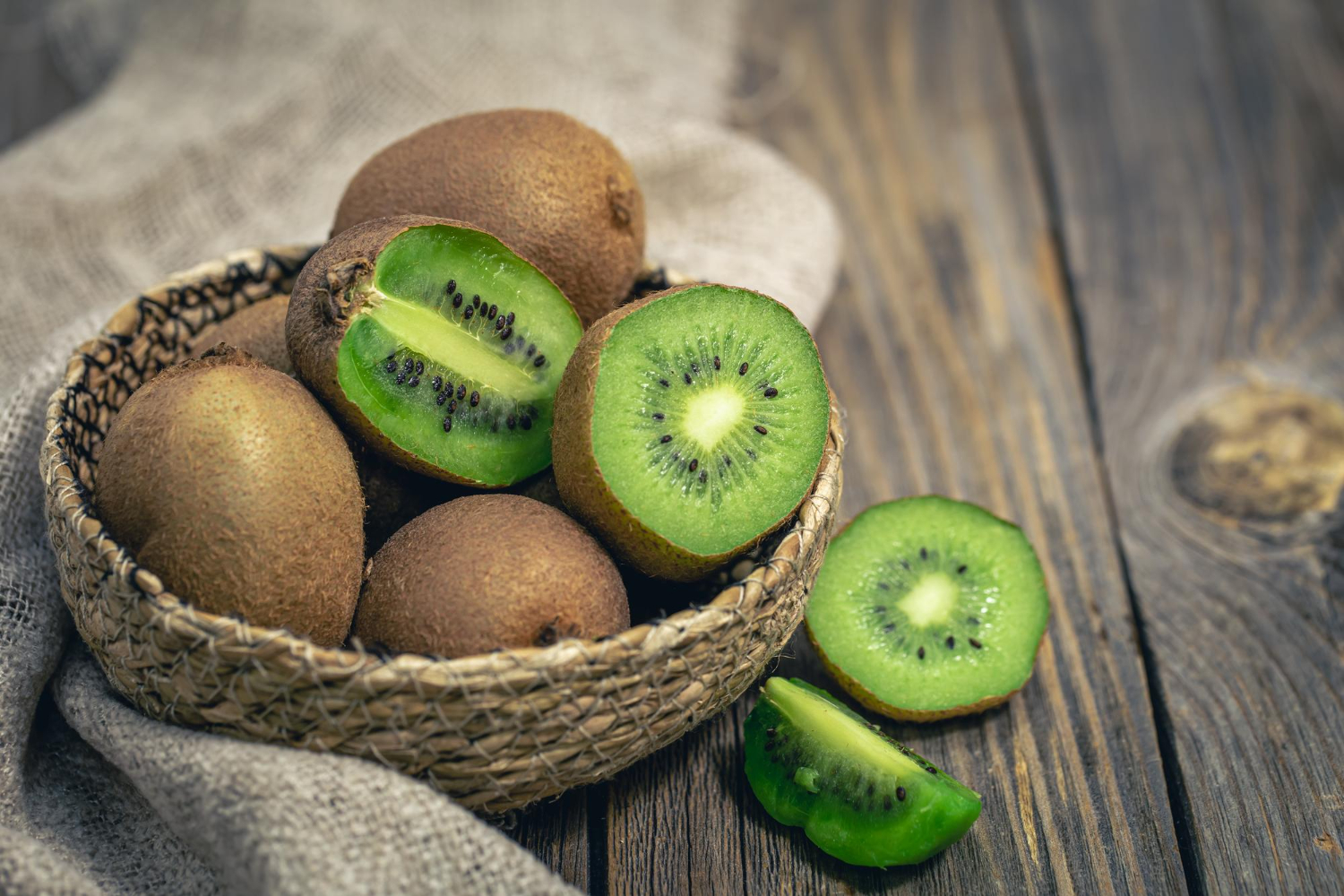
Kiwi, also called kiwifruit, has sweet-tart flesh, small edible seeds, and an edible outer skin. You can scoop it from the peel, eat it with the skin, slice it, or cut it into cubes for other dishes.
The best method depends on how quickly you want to eat the fruit and whether you enjoy the texture of the skin.
Four Ways to Eat a Kiwi
| Method | Tools needed | Best for |
| Cut and scoop | Knife and teaspoon | A quick, low-mess snack |
| Eat with the skin | No tools required | Fast preparation and less food waste |
| Peel and slice | Knife, spoon, or vegetable peeler | Breakfasts, desserts, and fruit plates |
| Cut into cubes or wedges | Knife and cutting board | Yogurt, oatmeal, salads, and smoothies |
Wash the Kiwi Before Eating It
Wash your hands before preparing the fruit. Hold the kiwi under cool running water and gently rub the surface with your fingers.
Wash it even when you plan to remove the skin. Cutting an unwashed kiwi can transfer dirt or microorganisms from the surface to the flesh.
Do not wash kiwi with soap, detergent, bleach, or household cleaning products. The FDA recommends using plain running water for fresh produce. Dry the fruit with a clean towel or paper towel after washing.
How to Tell If a Kiwi Is Ripe
Hold the kiwi in your hand and press it gently with your thumb.
A ripe kiwi should give slightly under light pressure. It should not feel completely hard, extremely soft, wet, or mushy.
A firm kiwi is normally underripe. It may still be edible, but its flesh will usually be more tart and difficult to scoop. Leave it at room temperature and check it each day.
To speed ripening, place the kiwi in a vented bag with an apple or banana and leave it at room temperature for a day or two. Refrigerate it once it reaches the desired softness.
Discard kiwi that is moldy, leaking, unusually slimy, badly damaged, or strongly fermented in smell.
1. Cut the Kiwi in Half and Scoop Out the Flesh
This is usually the easiest way to eat a ripe kiwi.
- Wash and dry the fruit.
- Place it on a stable cutting board.
- Cut the kiwi in half across its widest point.
- Slide a teaspoon between the flesh and the skin.
- Scoop out the flesh one bite at a time.
This method works best with ripe kiwi. Very firm fruit may be difficult to scoop, while overripe fruit may be watery and messy.
2. Eat the Kiwi With Its Skin
Kiwi skin is edible, so peeling is optional. After washing and drying the fruit, bite into it as you would bite into an apple.
Common green kiwi has fuzzy skin and a slightly tart taste. Gold kiwi typically has smoother, thinner skin.
To make fuzzy skin less noticeable, gently rub the washed fruit with a clean kitchen towel. You can also cut away the tough stem nub before eating it.
Eating the skin reduces preparation time and leaves less food waste. However, removing it is perfectly reasonable if you dislike the texture.
3. Peel and Slice the Kiwi
Peeling works well when you want tidy slices for oatmeal, pancakes, desserts, or a fruit plate.
How to peel a kiwi with a spoon
- Wash and dry the kiwi.
- Cut a thin slice from both ends.
- Insert a teaspoon between the skin and the flesh.
- Move the spoon around the inside of the skin.
- Gently push or slide the peeled fruit out.
Cut the peeled kiwi into round slices or half-moons.
You can also use a vegetable peeler or a small knife. Remove only a thin layer so that you do not waste too much flesh. A peeler may be easier for firm fruit, while the spoon method works best when the kiwi is ripe but not mushy.
4. Cut the Kiwi Into Cubes or Wedges
Cubed kiwi works well in yogurt, oatmeal, fruit salad, salsa, and smoothies. Wedges make a convenient finger food.
- Wash and peel the kiwi if desired.
- Place it on a stable cutting board.
- Cut it lengthwise into halves or quarters.
- Cut each section into cubes or wedges.
Use a clean, sharp knife and keep your fingers away from the cutting path.
Can You Eat Kiwi Seeds and the White Core?
Yes. The small black seeds are edible and do not need to be removed. They are soft enough to eat with the flesh.
The pale core in the center is also edible. It may feel slightly firmer than the surrounding fruit, especially when the kiwi is not fully ripe.
Simple Ways to Serve Kiwi
Kiwi can be served by itself or added to:
- Yogurt
- Oatmeal
- Pancakes or waffles
- Smoothies
- Fruit salad
- Green salad
- Salsa
- Chilled desserts
Add sliced kiwi shortly before serving when using it as a topping. This helps preserve its texture and appearance.
Common Mistakes to Avoid
Do not cut or peel kiwi before washing it. A knife can carry dirt or microorganisms from the skin into the flesh.
Avoid squeezing the fruit firmly when checking ripeness. Too much pressure can bruise it.
When peeling, remove only the skin rather than cutting away thick sections of edible flesh.
Do not leave cut kiwi at room temperature for more than two hours. When the surrounding temperature is above 90°F/32°C, refrigerate it within one hour.
How to Store Kiwi
Keep firm, unripe kiwi at room temperature until it gives slightly under gentle pressure.
Once it is ripe, refrigerate it to slow further ripening. Keep it away from damaged or spoiled fruit.
Place peeled or cut kiwi in a clean, covered container and refrigerate it promptly. Keep the refrigerator at or below 40°F/4°C. Use the cut fruit as soon as practical for the best texture and flavor.
Discard stored kiwi if it develops mold, a slimy surface, leaking liquid, or a strong unpleasant smell.
Can Kiwi Cause an Allergic Reaction?
Kiwi can cause allergic reactions in some people. It is also associated with pollen-food allergy syndrome, which may cause itching or swelling of the lips, mouth, tongue, or throat after eating raw fruit.
Stop eating kiwi if it repeatedly causes itching or swelling, and discuss the reaction with a qualified healthcare professional or allergist.
Seek emergency medical care immediately for difficulty breathing, throat swelling, dizziness, faintness, widespread hives, or other severe symptoms.
Frequently Asked Questions
How can you make a kiwi ripen faster?
Place the kiwi in a vented bag with an apple or banana and leave it at room temperature. Check it each day and refrigerate it once it gives slightly under gentle pressure.
Can you freeze kiwi?
Yes. Kiwi can be frozen whole, sliced, or crushed. Freezing may soften its texture, so thawed kiwi is particularly useful in smoothies, sauces, and desserts.
Can you prepare kiwi the night before?
Yes. Store peeled or cut kiwi in a clean, covered container in the refrigerator. It may release some juice overnight, so prepare it closer to serving time when appearance is important.
Can you blend kiwi without peeling it?
Yes. After washing the fruit thoroughly, you can blend the skin, flesh, core, and seeds together. The skin of green kiwi may give the drink a slightly rougher texture.
Are green and gold kiwi eaten in the same way?
Yes. Both types can be scooped, peeled, sliced, cubed, or eaten with the skin. Gold kiwi generally has smoother skin, while common green kiwi is fuzzier.
What should you do if kiwi makes your mouth itch?
Stop eating the fruit. Repeated itching may be associated with pollen-food allergy syndrome or another allergic reaction. Seek emergency help for breathing problems, throat swelling, dizziness, or other serious symptoms.