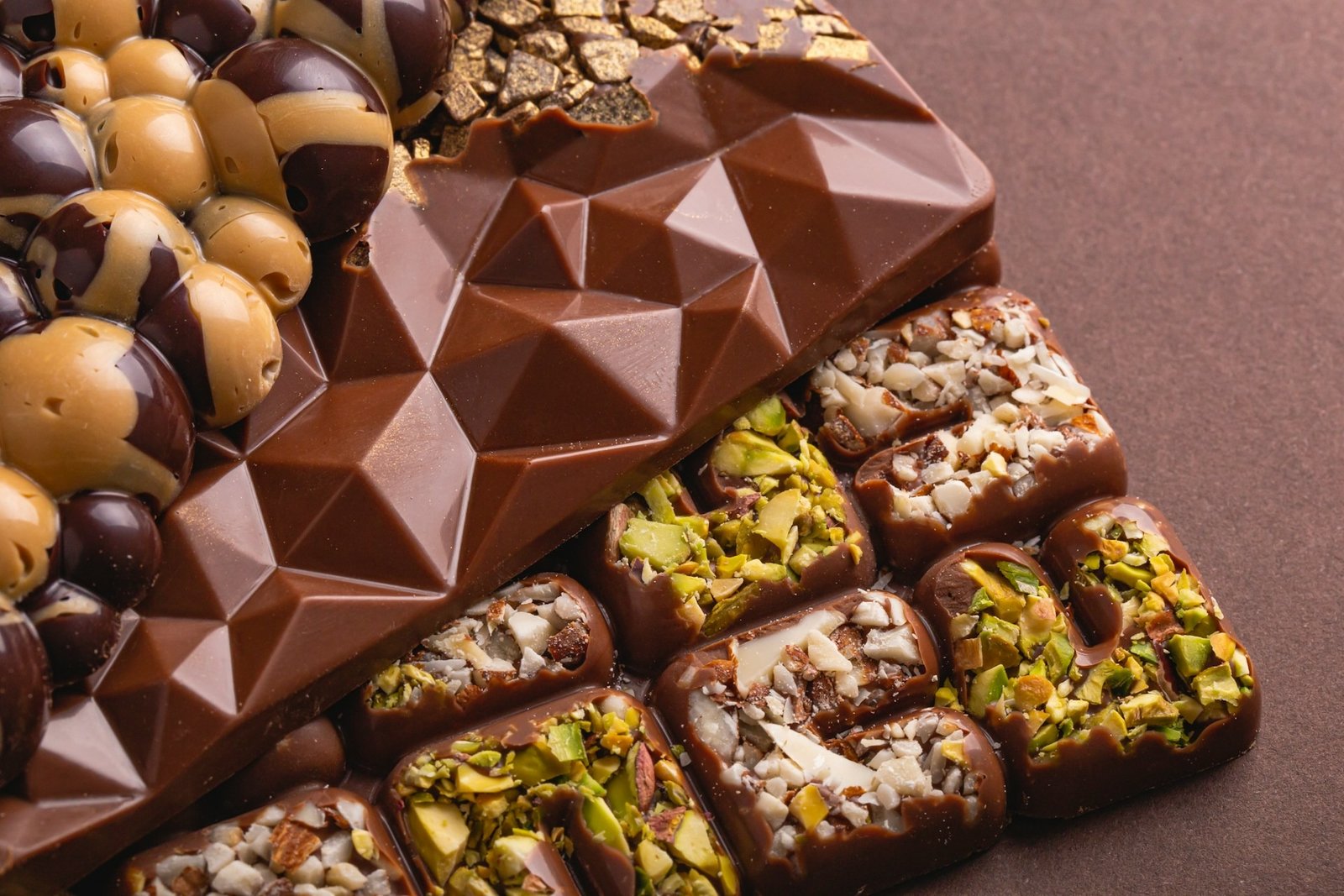
Dubai chocolate is a filled chocolate bar made with a crisp chocolate shell and a rich pistachio filling mixed with toasted kataifi pastry. The combination of smooth chocolate, creamy pistachio, and crunchy pastry is what gives the bar its distinctive texture.
You can make it at home without professional equipment. A chocolate bar mold gives the neatest result, but any small silicone mold or similar container can work if you simply want the flavor and texture.
What Is Dubai Chocolate?
Dubai chocolate is best known for its pistachio and kataifi filling. Kataifi is a very thin shredded pastry that becomes crisp when toasted in butter.
The filling is usually mixed with pistachio cream and a little tahini, then sealed inside a milk or dark chocolate shell. The result should be creamy in the center but still noticeably crunchy when you bite into it.
What You Need to Make Dubai Chocolate
You only need a few main ingredients.
| Ingredient | What it does |
| Milk or dark chocolate | Creates the outer shell |
| Kataifi pastry | Adds the crunchy texture |
| Pistachio cream | Makes the filling rich and creamy |
| Tahini | Adds nuttiness and balances sweetness |
| Butter | Helps toast the kataifi |
Pistachio cream is usually sweeter and smoother than pure pistachio butter, which makes it a good choice for this type of dessert.
How to Make Dubai Chocolate
The process is simple, but the order matters. Toast the kataifi first, prepare the filling, then build the chocolate shell.
1. Toast the Kataifi
Separate the kataifi strands and chop them into shorter pieces if necessary. This makes the filling easier to spread inside the chocolate bar.
Melt a little butter in a frying pan over medium heat, then add the kataifi. Cook it while stirring regularly until the pastry becomes evenly golden and crisp.
Do not stop as soon as it starts to change color. The kataifi should feel dry and crunchy, because under-toasted pastry can quickly become soft once mixed with pistachio cream.
Remove it from the heat and let it cool slightly.
2. Make the Pistachio Filling
Place the toasted kataifi in a bowl and add pistachio cream. Mix until the pastry is evenly coated but still retains plenty of texture.
Add a small amount of tahini and mix again. Tahini is not essential, but it adds a slightly savory, nutty flavor that helps balance the sweetness of the chocolate and pistachio cream.
The filling should hold together without becoming completely smooth. If you add too much pistachio cream, the kataifi may lose some of its crunch.
3. Make the Chocolate Shell
Break the chocolate into small pieces and melt it gently.
If using a microwave, heat it in short intervals and stir between each one. Stop once the chocolate is smooth rather than continuing to heat it unnecessarily.
Pour some melted chocolate into your mold and spread it across the bottom and up the sides. Make sure the shell is thick enough to hold the filling without breaking.
Place the mold in the refrigerator for a short time until the chocolate becomes firm.
4. Add the Pistachio Filling
Once the chocolate shell has set, spoon the pistachio and kataifi mixture into the mold.
Spread it evenly without pressing it down too aggressively, as you want to preserve the crunchy texture. Leave a small amount of space at the top of the mold for the final chocolate layer.
Avoid filling right to the edge, or the chocolate may not seal the bar properly.
5. Seal the Dubai Chocolate Bar
Pour the remaining melted chocolate over the pistachio filling and spread it evenly so that the filling is completely covered.
Return the mold to the refrigerator and chill until the chocolate is fully firm. Once set, carefully remove the bar from the mold.
For the best texture, let it sit at room temperature for a few minutes before cutting if it is very cold.
How to Melt Chocolate Without Burning It
Chocolate can burn or become grainy if it gets too hot, so melt it slowly.
When using a microwave, heat for short periods and stir often. The residual heat in the bowl will continue melting the chocolate even after you stop heating it.
You should also keep water away from melted chocolate. Even a small amount can cause it to become thick or difficult to work with.
Do You Need to Temper the Chocolate?
You do not have to temper chocolate to make a homemade Dubai chocolate bar.
Simply melting the chocolate and allowing it to set in the refrigerator will still give you a good result. This is the easiest approach if you are making the bar for yourself or serving it soon.
Tempering becomes useful if you want a shinier finish, a cleaner snap, and chocolate that remains more stable at room temperature. It is an optional extra rather than a requirement.
What If You Can’t Find Kataifi?
Kataifi is what gives Dubai chocolate its distinctive crunchy filling, so it is worth using if you can find it.
It is often sold frozen or refrigerated in stores that carry Middle Eastern or Mediterranean ingredients. Make sure it is fully thawed before separating and toasting the strands.
If kataifi is unavailable, you can experiment with a very crisp substitute such as crushed toasted cereal. The bar can still taste good, but it will not have the same texture as traditional kataifi.
Should You Use Milk or Dark Chocolate?
Milk chocolate creates a sweeter bar and pairs naturally with pistachio cream. It is a good choice if you want the familiar rich dessert flavor.
Dark chocolate gives a stronger cocoa taste and helps reduce the overall sweetness. This can work particularly well if your pistachio cream is already very sweet.
You can also use white chocolate, although the finished bar will be much sweeter.
Why Is My Dubai Chocolate Not Crunchy?
The most common reason is that the kataifi was not toasted enough. It should be properly golden and crisp before being mixed with the pistachio cream.
Another common issue is using too much pistachio cream. The filling should coat the pastry rather than completely overwhelm it.
Moisture can also soften the kataifi over time. Make sure the pastry has cooled before mixing the filling, and keep the finished chocolate covered when storing it.
How to Store Dubai Chocolate
Store homemade Dubai chocolate in a covered container in a cool place. If your kitchen is warm, keeping it in the refrigerator is the safer option for maintaining the chocolate shell.
Refrigerated chocolate can become quite firm, so you may want to leave it at room temperature for a few minutes before eating.
For the best crunch, eat the bar while it is relatively fresh. The kataifi can gradually soften as it sits in contact with the creamy filling.
Frequently Asked Questions
Dubai chocolate usually contains toasted kataifi pastry mixed with pistachio cream and a little tahini. The filling is sealed inside a chocolate shell.
Yes, but the texture will be different. Kataifi provides the distinctive crisp strands, so substitutes will only give a similar crunch rather than the same result.
Yes. Tahini adds a nutty, slightly savory flavor, but the filling can still be made with pistachio cream and toasted kataifi alone.
Milk chocolate gives a sweeter result, while dark chocolate balances the filling with a stronger cocoa flavor. Choose whichever type you prefer eating on its own.
The kataifi may not have been toasted long enough, or there may be too much pistachio cream in the mixture. Toast the pastry until fully crisp and avoid making the filling overly wet.
Chill it until the chocolate shell is completely firm. The exact time depends on the size and thickness of your bar, but you should be able to remove it cleanly from the mold when it is ready.