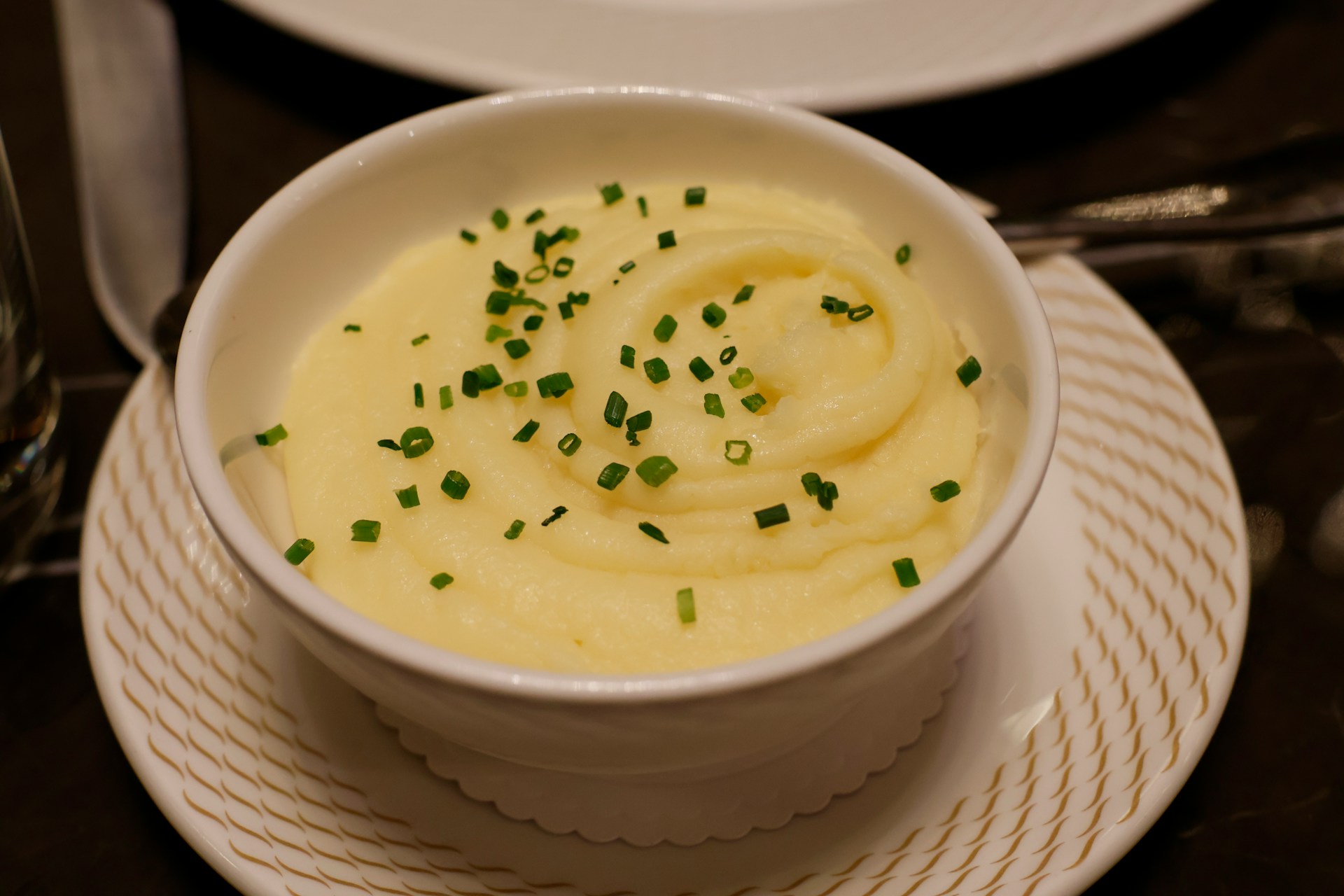
Mashed potatoes are simple to make, but the right technique makes a big difference. For the best results, choose the right potatoes, start them in cold salted water, drain them well, and add butter and warm milk gradually.
Key Takeaways
- Use Russet potatoes for fluffy mashed potatoes, Yukon Gold potatoes for creamy mashed potatoes, or a mix of both for balanced texture.
- Cut the potatoes into evenly sized chunks so they cook at the same rate.
- Start potatoes in cold salted water, then simmer until they are fully fork-tender.
- Drain the potatoes well and let extra moisture evaporate before mashing.
- Add butter first, then slowly stir in warm milk or cream until the potatoes are smooth and creamy.
Ingredients
For 4 servings, you will need:
- 2 pounds Russet potatoes, Yukon Gold potatoes, or a mix
- 4 tablespoons butter
- 1/2 cup warm milk or cream, plus more as needed
- Salt, to taste
- Black pepper, to taste
Optional additions include roasted garlic, sour cream, cream cheese, cheddar, Parmesan, chives, brown butter, or fresh herbs.
Best Potatoes for Mashed Potatoes
Russet potatoes make light, fluffy mashed potatoes because they are high in starch. Yukon Gold potatoes create a richer, creamier mash with a naturally buttery flavor. For the best balance, use half Russet and half Yukon Gold.
Red potatoes can also be used, especially if you like rustic mashed potatoes with the skins left on. However, they are waxier than Russet or Yukon Gold potatoes, so they do not mash as lightly or smoothly.
How to Make Mashed Potatoes
1. Peel and Cut the Potatoes
Peel the potatoes if you want smooth mashed potatoes. Russet potatoes usually should be peeled because their skins are thicker. Yukon Gold or red potatoes can be left partly unpeeled for a more rustic texture.
Cut the potatoes into evenly sized chunks, about 1 to 2 inches wide.
2. Start in Cold Salted Water
Place the potato chunks in a large pot and cover them with cold water. Add salt to the water, then bring it to a boil.
Starting in cold water helps the potatoes cook evenly from the inside out. Once the water boils, reduce the heat to a steady simmer so the potatoes cook gently without breaking apart too much.
3. Cook Until Fork-Tender
Cook the potatoes for about 15 to 20 minutes, or until a fork slides easily into the center. Smaller pieces may cook in 10 to 12 minutes, while larger chunks may take 20 to 25 minutes.
Do not drain the potatoes too early. Undercooked potatoes are one of the most common reasons mashed potatoes turn out lumpy.
4. Drain and Dry the Potatoes
Drain the potatoes well in a colander. For better texture, return them to the warm empty pot over low heat for 1 to 2 minutes, stirring gently. This removes extra moisture and helps prevent watery mashed potatoes.
The potatoes should look hot, steamy, and slightly dry on the surface before you mash them.
5. Mash Gently
Mash the potatoes while they are hot. Use a potato masher, ricer, or food mill. A ricer gives the smoothest, lightest texture, while a hand masher works well for classic homemade mashed potatoes.
Avoid using a blender or food processor. These tools can overwork the potatoes, release too much starch, and make the mashed potatoes gluey.
6. Add Butter and Warm Milk
Add the butter first and stir gently until melted. Then add warm milk or cream a little at a time until the potatoes reach your desired texture.
Warm dairy blends more smoothly and helps keep the potatoes hot. Add liquid gradually because it is easier to thin mashed potatoes than to fix potatoes that are too loose.
7. Season and Serve
Add salt and black pepper to taste. Serve warm with butter, gravy, herbs, roasted garlic, or your favorite main dish.
Simple Mashed Potatoes Recipe
| Prep Time | Cook Time | Total Time | Servings |
| 10 minutes | 20 minutes | 30 minutes | 4 |
Ingredients
- 2 pounds Russet potatoes, Yukon Gold potatoes, or a mix
- 4 tablespoons butter
- 1/2 cup warm milk or cream, plus more as needed
- Salt, to taste
- Black pepper, to taste
Instructions
Peel and cut the potatoes into even chunks. Place them in a pot, cover with cold salted water, and bring to a boil. Reduce to a steady simmer and cook for 15 to 20 minutes, or until fork-tender.
Drain well, then return the potatoes to the warm pot for 1 to 2 minutes to remove extra moisture. Mash while hot. Stir in the butter first, then slowly add warm milk or cream. Season with salt and pepper and serve warm.
How to Make Mashed Potatoes Creamy and Fluffy
For creamy mashed potatoes, use Yukon Gold potatoes or a mix of Yukon Gold and Russet potatoes. Use enough butter, warm the milk or cream before adding it, and mash while the potatoes are still hot.
For fluffy mashed potatoes, use Russet potatoes, drain them very well, and avoid overmixing. A potato ricer is ideal because it breaks down the potatoes without making them heavy or sticky.
Common Mashed Potato Problems
| Problem | Likely Cause | How to Fix It |
| Watery mashed potatoes | Too much moisture or too much liquid | Heat gently over low heat and stir until extra moisture evaporates. |
| Dry mashed potatoes | Not enough liquid or fat | Add warm milk, cream, or melted butter a little at a time. |
| Bland mashed potatoes | Not enough salt | Add salt gradually, taste, and adjust. |
| Lumpy mashed potatoes | Potatoes were undercooked | Warm gently with a splash of milk and mash again. |
| Gluey mashed potatoes | Potatoes were overmixed | Fold in butter, cream, sour cream, or cheese to improve the texture slightly. |
Gluey mashed potatoes are difficult to fully fix, so prevention is best. Mash gently and avoid using a blender or food processor.
Make-Ahead, Storage, and Reheating
Mashed potatoes can be made earlier the same day or 1 day ahead. Store leftovers in an airtight container in the refrigerator and use within 3 to 4 days. For food safety, refrigerate leftovers within 2 hours.
To reheat, add a splash of milk or cream and warm gently on the stove, in the oven, or in the microwave. Stir gently and add more butter or milk if needed.
Mashed potatoes can also be frozen, especially if they contain enough butter or cream. Store them in a freezer-safe container or bag and use within 1 to 2 months for best quality. Thaw in the refrigerator before reheating. The texture may be slightly grainier after freezing, but adding butter or cream while reheating can help make them smooth again.
What to Serve with Mashed Potatoes
Mashed potatoes pair well with roast chicken, turkey, meatloaf, beef stew, pork chops, Salisbury steak, mushroom gravy, roasted vegetables, and lentil or mushroom-based mains.
They are also a classic side dish for holiday meals, comfort food dinners, and make-ahead family meals.
FAQ
Do I need to peel potatoes for mashed potatoes?
Not always. Peel Russet potatoes if you want smooth mashed potatoes because their skins are thick. Yukon Gold and red potatoes can be left partly unpeeled for a more rustic texture.
Why did my mashed potatoes turn gluey?
Mashed potatoes usually turn gluey when they are overmixed or processed in a blender or food processor. Use a masher, ricer, or food mill, and mix only until the potatoes come together.
Can I make mashed potatoes ahead of time?
Yes. You can make mashed potatoes earlier the same day or 1 day ahead. Store them covered in the refrigerator, then reheat gently with a splash of milk or cream.
Can I make mashed potatoes without milk?
Yes. You can use cream, half-and-half, broth, sour cream, or unsweetened plant-based milk. For richer potatoes, add extra butter.
What is the best tool for smooth mashed potatoes?
A potato ricer gives the smoothest and lightest texture. A food mill also works well. A hand masher is best for classic, slightly rustic mashed potatoes.
How do I keep mashed potatoes warm before serving?
Keep mashed potatoes covered over very low heat, in a slow cooker on the warm setting, or in a heatproof bowl set over warm water. If they thicken, stir in a little warm milk or cream before serving.