Key takeaways
- Choose a quit date within the next two weeks and prepare for the situations that normally trigger smoking.
- Combining behavioral support with an evidence-based quit-smoking treatment generally offers the best chance of lasting success.
- Using a nicotine patch with gum or lozenges can work better than using one nicotine-replacement product alone.
- Withdrawal is usually strongest during the first week and gradually becomes easier over the following weeks.
- A single cigarette does not erase your progress. Return to your quit plan immediately and learn from what triggered the slip.
Quitting smoking can be difficult because nicotine causes dependence—not because you lack willpower. A practical quit plan combines preparation, proven treatment, strategies for managing cravings, and continued support.
Stopping smoking improves health at any age, including for people who have smoked heavily or for many years. The benefits begin soon after the last cigarette and continue to increase over time.
This article provides general information and does not replace advice from a doctor, pharmacist, or qualified smoking-cessation professional.
Make a quit plan and choose a date
Choose a quit date within the next one or two weeks. This gives you enough time to prepare without allowing the plan to become distant or indefinite.
Before that date:
- Write down your main reasons for quitting.
- Remove cigarettes, tobacco, lighters, ashtrays, and hidden supplies from your home, car, and workplace.
- Tell supportive family members, friends, or coworkers about your plan.
- Arrange any medication or professional support you intend to use.
- Ask people not to smoke around you or offer you cigarettes.
For several days, pay attention to when you smoke and what happens immediately beforehand. Common triggers include coffee, alcohol, driving, finishing a meal, taking a work break, feeling stressed, and spending time with people who smoke.
Prepare a specific replacement for each common trigger. For example, you could take a short walk after meals, change your morning drink, use a different route to work, call a supportive person during a difficult break, or avoid alcohol temporarily.
Small environmental changes can help. If you normally smoke while drinking coffee in one chair, drink it somewhere else or replace it with another beverage during the first week.
Choose an evidence-based quit-smoking treatment
Behavioral support helps you change routines, manage stress, and respond differently to smoking triggers. Medication can reduce cravings and withdrawal symptoms. Using both approaches together generally provides the strongest chance of quitting successfully.
| Treatment | How it may help | Important points |
| Nicotine-replacement therapy | Patches provide a steady dose of nicotine, while gum, lozenges, sprays, or inhalers can help with sudden cravings | A patch combined with a shorter-acting nicotine product may work better than one product alone |
| Non-nicotine medicines | Varenicline, bupropion, and, in some countries, cytisine can reduce cravings, withdrawal, or the rewarding effects of nicotine | Availability and prescribing rules vary; a healthcare professional should check risks, side effects, and interactions |
| Behavioral support | Individual, group, telephone, or healthcare counseling develops coping skills and strengthens a quit plan | Repeated, personalized support is generally more effective than trying without assistance |
| Digital support | Text programs, apps, and online plans can provide reminders, tracking, and encouragement | Choose a reputable program and use it alongside appropriate professional or medical support |
The World Health Organization recommends behavioral support, nicotine-replacement therapy, varenicline, bupropion, and cytisine as evidence-based treatments for adults who want to stop using tobacco. The treatments available without a prescription, and the medicines approved for smoking cessation, differ by country.
Ask a doctor, pharmacist, or local stop-smoking service which option is appropriate for you. Professional advice is particularly important if you:
- Are pregnant or breastfeeding.
- Are younger than 18.
- Have a history of seizures or an eating disorder.
- Have kidney, heart, or other significant medical conditions.
- Take prescription or over-the-counter medicines.
- Have severe or changing mental-health symptoms.
Check when your treatment should begin. Varenicline and bupropion are normally started before the quit date. Some nicotine-replacement plans may also begin before quitting. Follow the product instructions and professional advice rather than creating your own dosing schedule.
Prepare for cravings and nicotine withdrawal
When you stop smoking, your body and brain must adjust to the absence of nicotine. Withdrawal can cause:
- Strong urges to smoke.
- Irritability or restlessness.
- Low mood or anxiety.
- Difficulty concentrating.
- Changes in sleep.
- Increased appetite.
Symptoms are usually strongest during the first several days or first week. They normally become weaker and less frequent over the following weeks, although everyone’s experience is different.
When a craving begins, use the four Ds:
- Delay: Wait before acting on the urge.
- Deep breathing: Breathe in and out slowly.
- Drink water: Sip it slowly and focus on the action.
- Do something different: Change your location or activity.
A short walk, shower, household task, phone call, or conversation can interrupt the usual smoking routine. Individual cravings are temporary, even when they feel intense.
Use your quit-smoking treatment according to its instructions, including any scheduled doses. Do not wait until withdrawal becomes overwhelming before using a treatment that is intended to be taken regularly.
Consider temporarily reducing coffee, energy drinks, or other caffeinated products if they make you feel restless or interfere with sleep. Keep healthy, satisfying snacks available and try to maintain regular meals.
Some people gain weight after quitting, but the health risks associated with continuing to smoke are far greater. A balanced diet and regular activity can help without distracting from the main goal of remaining smoke-free.
Follow your quit-day plan
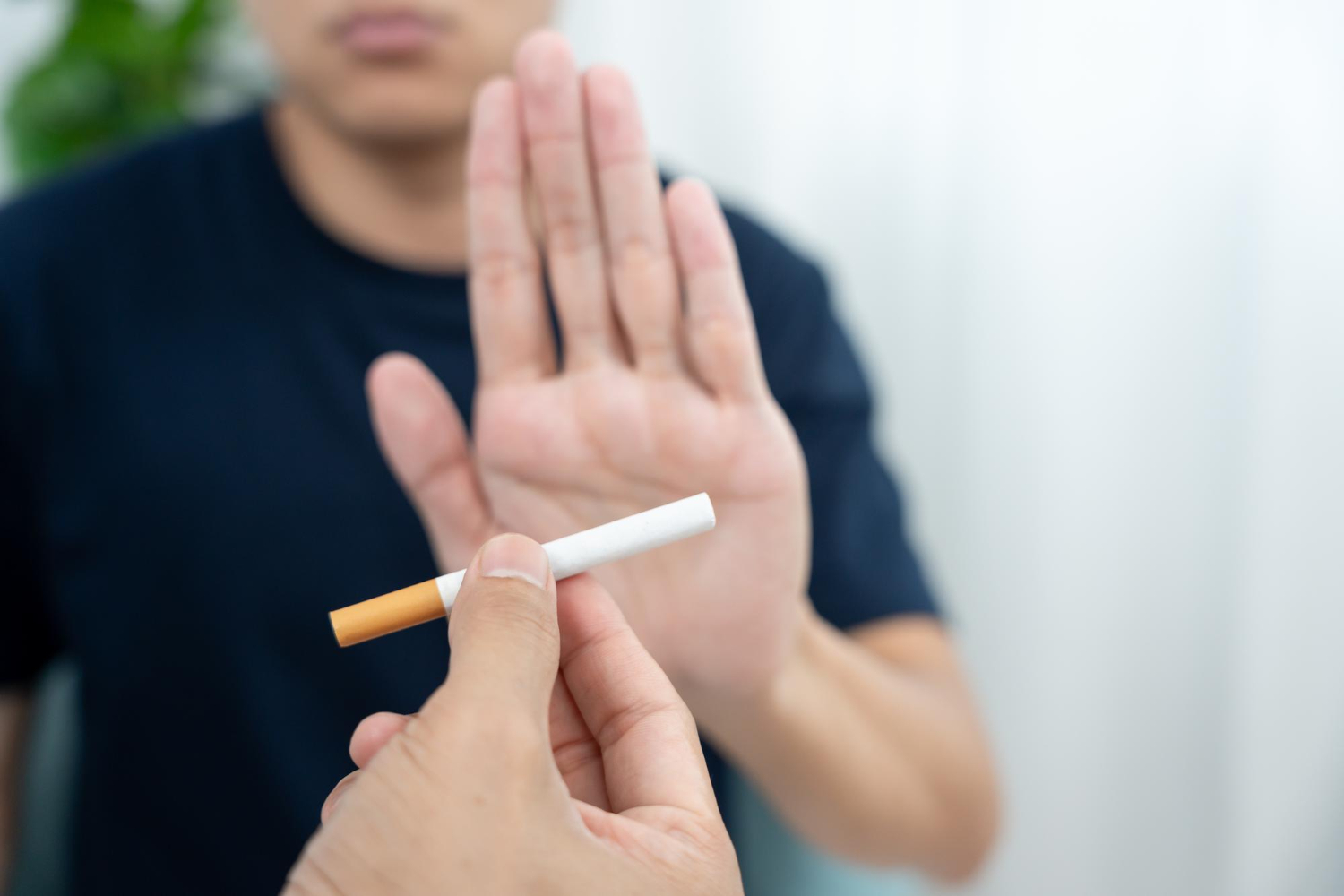
On your quit date, do not smoke “just one” cigarette. One cigarette can quickly reactivate the familiar nicotine-and-trigger cycle.
Follow your treatment schedule carefully. Keep the day structured, spend time in smoke-free places, and avoid high-risk situations where possible. Carry water, nicotine gum or lozenges if they are part of your plan, and something that keeps your hands occupied.
Track your smoke-free days and the money you save. You may also record cravings and how you handled them. This can show which strategies are working and where your plan needs adjustment.
Health improvements begin soon after the last cigarette. Over time, quitting lowers the risks of heart disease, stroke, chronic lung disease, and numerous cancers.
Recover quickly from a slip
A slip means smoking after you intended to quit. It does not mean that all your progress has been lost, but it should be addressed immediately.
Put out the cigarette, discard the remaining cigarettes, and return to your quit plan. Then identify what happened:
- Were you stressed or upset?
- Had you been drinking alcohol?
- Were you around other people who were smoking?
- Did you miss a treatment dose?
- Were you unprepared for a familiar trigger?
Use the answer to strengthen your plan. You may need to avoid a situation temporarily, carry a faster-acting nicotine-replacement product, arrange additional counseling, or ask someone for more support.
Needing more than one attempt is common when treating nicotine dependence. Each attempt can provide useful information about your triggers and the support you need.
When to get professional or urgent help
Contact a doctor, pharmacist, or stop-smoking service if withdrawal is difficult to manage, you are unsure how to use a treatment, you experience troublesome side effects, or you repeatedly return to smoking despite following a treatment plan.
Temporary mood changes can occur during nicotine withdrawal. Seek professional help if depression, anxiety, agitation, or other mental-health symptoms are severe, worsening, or persistent.
Seek urgent local emergency or crisis assistance immediately if you have thoughts of harming yourself or ending your life.
Frequently asked questions
Is it better to reduce gradually or stop all at once?
Either approach can work. Research has not shown that stopping abruptly is consistently more successful than gradually reducing before quitting.
Choose the approach you are most likely to complete. If you reduce gradually, set a clear date when smoking will stop completely. Medication and behavioral support can improve the likelihood of success with either approach.
Should I start quit-smoking medicine before my quit date?
It depends on the treatment. Varenicline and bupropion are generally started before the quit date so that the medicine has time to begin working.
Some nicotine patches, gum, or lozenges may also be started before quitting as part of a structured plan. Follow the product label and the advice of a doctor or pharmacist.
How long should I use nicotine replacement or another treatment?
Treatment duration depends on the product, your level of nicotine dependence, and your response. Many treatments are used for approximately 6 to 12 weeks, although some people benefit from longer treatment.
Do not stop early simply because the first few days have gone well. Follow the instructions and ask a healthcare professional before changing your treatment.
Is nicotine-replacement therapy safer than smoking?
Nicotine-replacement products provide nicotine without burning tobacco. This avoids the toxic smoke responsible for most smoking-related disease, making nicotine-replacement therapy much less harmful than continued cigarette smoking.
It is not suitable for every person or situation, so follow the label and seek advice when pregnant, breastfeeding, younger than 18, or living with a significant medical condition.
What can I do if someone in my household still smokes?
Ask them not to smoke around you, offer you cigarettes, or leave smoking supplies where you can see them. Make the home and car smoke-free if possible.
Plan an alternative activity for times when that person goes outside to smoke. They do not have to quit at the same time as you, but their cooperation can make your environment much safer and easier to manage.