Cutting a mango is simple once you know where the pit is. Mangoes have a long, flat pit running through the center, so the easiest method is to cut down either side of it and remove the two large cheeks first.
From there, you can turn the mango into cubes, slices, or smaller pieces depending on how you want to use it. Keeping the skin on while you cut also makes the fruit easier and less slippery to handle.
How to Tell If a Mango Is Ripe
A ripe mango should usually give slightly when you press it gently with your fingers. It should feel soft enough to cut easily but not so soft that it feels mushy.
Color is not always the best way to judge ripeness because different mango varieties can stay green, turn yellow, or develop red areas as they ripen.
If the mango is extremely soft, leaking, or has a strong fermented smell, it may be overripe.
What You Need to Cut a Mango
You only need a cutting board, a sharp kitchen knife, and a large spoon.
Wash the outside of the mango before cutting it, even though you will not normally eat the skin. This helps prevent dirt on the surface from being transferred to the flesh by the knife.
How to Cut a Mango Step by Step
The easiest method is to remove the two large sides, or cheeks, first.
- Place the mango upright on a cutting board.
- Imagine the flat pit running vertically through the middle.
- Cut down one side of the center to remove the first mango cheek.
- Repeat on the other side.
- Score the flesh into slices or cubes without cutting through the skin.
- Scoop the pieces out with a large spoon.
If your knife hits something hard, you are probably touching the pit. Move the knife slightly farther to the side and continue cutting.
The thin center section around the pit will still have some edible flesh, so do not throw it away immediately.
How to Cut a Mango Into Cubes
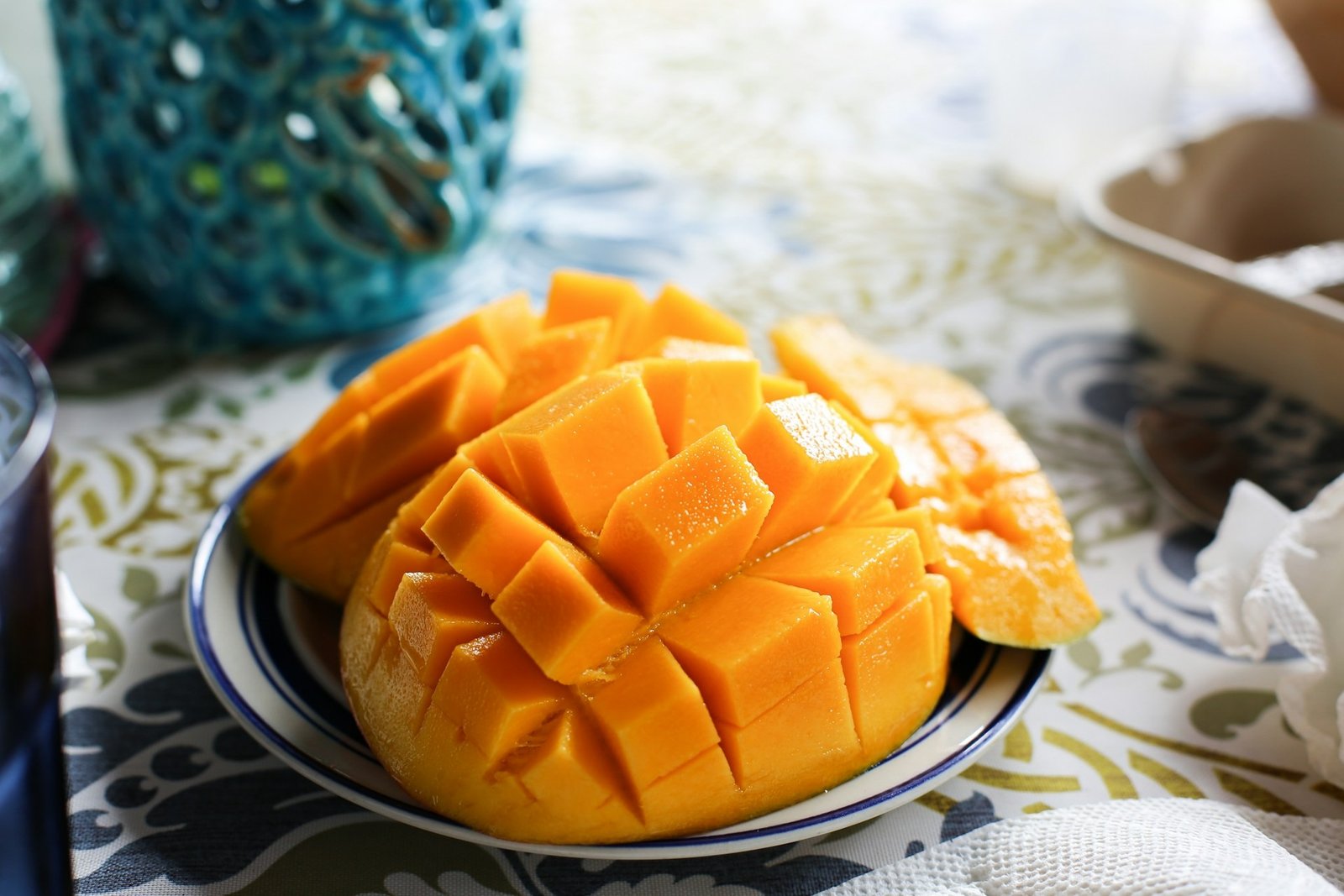
Place one mango cheek skin-side down on the cutting board. Carefully make several vertical cuts through the flesh without cutting through the skin.
Turn the mango and make horizontal cuts to create a grid of small squares.
You can then scoop the cubes out with a spoon. Some people push the skin outward so the cubes stick up, but scooping is usually easier and less messy.
Repeat with the second mango cheek.
How to Cut a Mango Into Slices
For mango slices, cut each cheek into parallel lines instead of making a grid.
Slide a large spoon between the skin and the flesh to remove the slices. You can also scoop the entire cheek out first and place it flat on the cutting board before slicing.
Thinner slices work well for yogurt, desserts, and breakfast bowls, while larger pieces are good for snacking or fruit platters.
Mango Cubes vs. Slices
The way you cut a mango depends mainly on how you plan to use it.
| Cut | Best for |
| Cubes | Fruit salads, yogurt, smoothies |
| Thin slices | Desserts and breakfast bowls |
| Large slices | Snacking and fruit platters |
| Small diced pieces | Salsa, sauces, and toppings |
There is no right or wrong shape. Once the cheeks are removed, you can cut the mango however you prefer.
How to Cut the Mango Around the Pit
After removing both cheeks, you will be left with the narrow center section containing the pit.
Lay this section flat on the cutting board and carefully trim away the remaining flesh from around the pit. The pieces may not look as neat as the cubes from the cheeks, but they are still perfectly good to eat.
These smaller pieces work especially well in smoothies, sauces, salsa, or yogurt.
You can also eat the remaining flesh directly from around the pit if you do not mind getting a little messy.
Should You Peel a Mango Before Cutting It?
Usually, no. It is generally easier to cut a mango while the skin is still attached.
The skin gives you something firm to hold and reduces the chance of the fruit slipping while you cut it. Once the flesh has been scored, it can easily be separated from the skin with a spoon.
If the mango is quite firm, you can peel it first with a vegetable peeler. Very ripe mangoes are often too soft and slippery for this method.
How to Cut a Mango Without Making a Mess
Mango flesh can become slippery, especially when the fruit is very ripe. Using a sharp knife and a stable cutting board makes the process easier and safer.
Leave the skin on until you have removed the cheeks. This gives you better control and keeps your hands cleaner.
If a lot of juice collects on the cutting board, work slowly and wipe the surface if necessary before continuing.
How to Store Cut Mango
Place cut mango in a covered container and keep it in the refrigerator. For the best flavor and texture, try to eat it within a few days.
If you have more mango than you can use, you can freeze the pieces. Spread mango cubes in a single layer on a tray first so they freeze separately, then transfer them to a freezer bag or container.
Frozen mango is especially useful for smoothies and blended desserts.
Frequently Asked Questions
Cut off the two large cheeks on either side of the flat pit, score the flesh, and scoop it out with a spoon. This method is simple and works for both cubes and slices.
The pit is long, thin, and flat and runs through the middle of the fruit. If your knife hits something hard, move slightly farther to the side and cut around it.
No. It is usually easier to leave the skin on while cutting, then scoop the flesh away afterward.
Mango skin is technically edible, but many people remove it because it can be tough and slightly bitter. The soft flesh is the part most commonly eaten.
The mango may be underripe, or your knife may be hitting the pit. Try cutting slightly farther from the center and make sure you are using a sharp knife.
Cut mango is best eaten within a few days. Keep it in a covered container in the refrigerator to help maintain its texture and flavor.