Key Takeaways
- Hold the crawfish near the joint and twist the tail away from the head.
- Peel the first few tail-shell segments, pinch the narrow tip, and pull out the meat.
- Sucking the seasoned juices from the head is traditional but completely optional.
- The larger claws may contain meat, although the smallest claws are rarely worth opening.
- Refrigerate leftovers within two hours—or one hour above 90°F—and use them within three to four days.
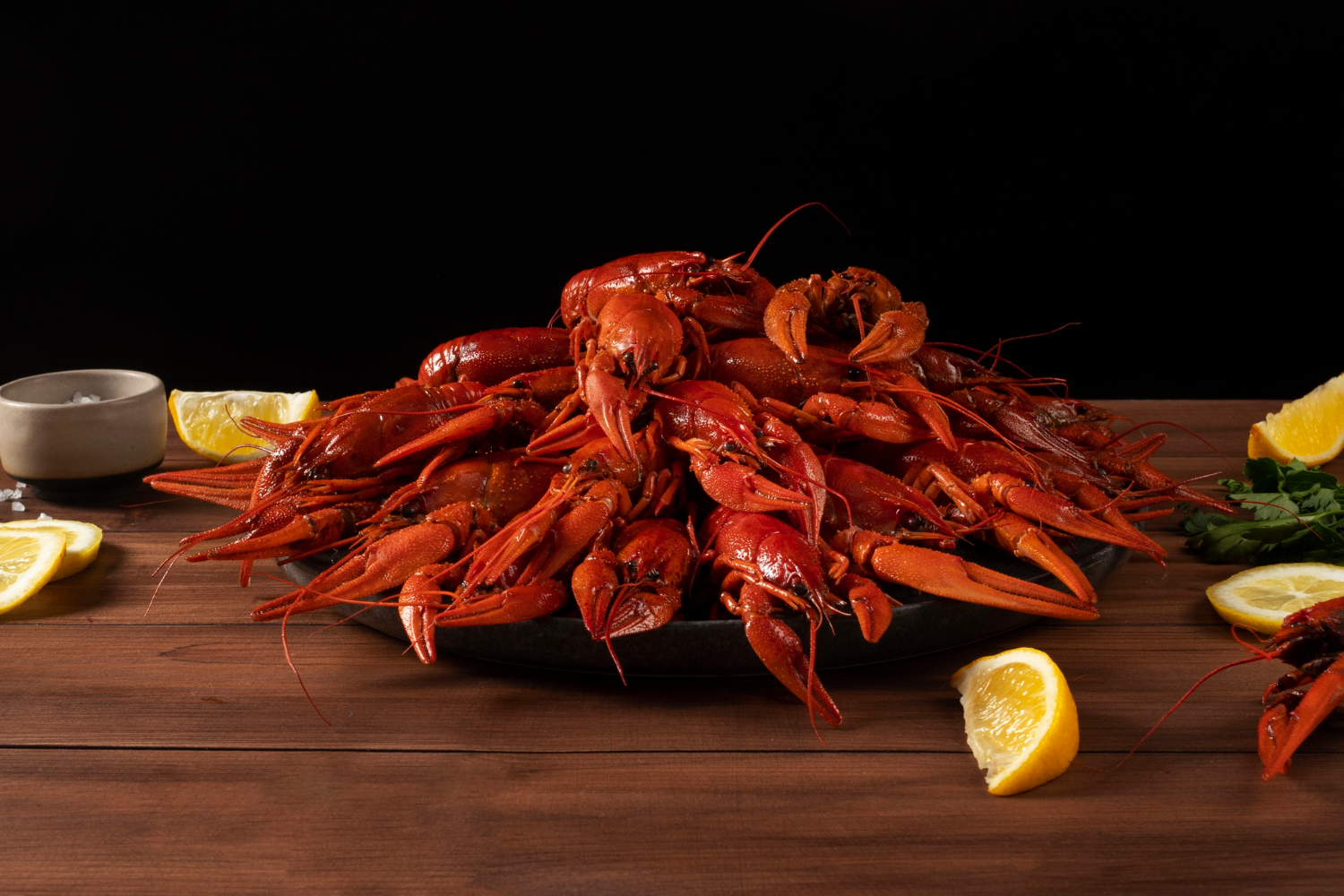
Eating boiled crawfish can look complicated when everyone around you is peeling quickly. The basic technique, however, is simple: separate the head and tail, loosen the shell, and pull out the tail meat.
After peeling a few crawfish, the motions usually become much easier. The following steps explain how to eat crawfish neatly, safely, and without wasting the best meat.
What Parts of a Crawfish Can You Eat?
The tail contains most of the easily accessible meat. Crawfish tail meat is firm, mildly sweet, and good at absorbing the seasoning used in a seafood boil.
Some people also suck the seasoned juices and soft contents from the head. The yellow-orange material commonly called “crawfish fat” is primarily the hepatopancreas, an organ involved in digestion and nutrient storage. It is not the crawfish’s brain or pure body fat.
| Crawfish part | Is it eaten? | What to know |
| Tail | Yes | Contains most of the accessible meat |
| Head juices and soft contents | Optional | Some diners suck them from the opening after removing the tail |
| Large claws | Sometimes | May contain a small but worthwhile piece of meat |
| Legs | Optional | May hold seasoning or a very small amount of meat |
| Hard shell and gills | No | Normally discarded |
You do not eat or chew the hard head shell. Sucking the head refers only to drawing out its seasoned juices and soft contents.
How to Eat Crawfish in 5 Steps
1. Hold the Crawfish Correctly
Hold the head with one hand and the tail with the other. Position your fingers close to the joint where the two sections meet.
Keep the crawfish over a plate, tray, or sheet of paper because seasoned liquid may drip as you separate it.
2. Twist Off the Tail
Twist the tail gently while pulling it away from the head. The two sections should separate at the joint without requiring much force.
At this point, you can place the open end of the head near your lips and gently suck out the seasoned juices. This step is optional. Eating only the tail is completely normal.
3. Peel the Tail Shell
Start at the wider end of the tail. Remove the first two or three shell segments by lifting the softer underside with your thumbs.
Work around the tail instead of squeezing it forcefully. Excessive pressure can break the meat and make it more difficult to remove.
4. Pull Out the Tail Meat
Once enough meat is exposed, hold it at the wider end. Pinch the narrow tail fan with your other hand and pull gently.
The meat may slide out in one piece. If it sticks, peel away one more shell segment, gently straighten the tail, and try again. Do not squeeze harder, because that usually breaks the meat.
A dark line may run along the back of the tail. This is part of the digestive tract and may contain some grit. You can lift it away with your fingers before eating. Removing it is mainly a matter of texture and appearance.
Check the meat briefly for small shell fragments before eating it.
5. Check the Larger Claws
The larger claws sometimes contain a small piece of meat. Break a claw from the body at its joint and crack the shell carefully with your fingers or teeth.
Remove the meat and check it for sharp shell fragments. The smallest claws usually contain too little accessible meat to justify opening them.
Practical Tips for Beginners
Keep a separate bowl or tray nearby for discarded shells. Napkins, wet wipes, or a damp towel are also helpful because crawfish-boil seasoning can be oily and spicy.
Food-safe disposable gloves can help if you have sensitive skin or small cuts on your hands. Gloves may reduce your grip slightly, so work slowly until you become comfortable with the peeling motion.
Avoid touching your eyes or face while eating. Wash your hands thoroughly before handling your phone, clothing, or other personal items.
If the seasoning is very spicy, alternate the crawfish with potatoes, corn, bread, or another mild side dish.
How to Eat Crawfish Safely
Do Not Use Tail Curl as a Safety Test
A straight tail does not reliably show whether a crawfish was alive before cooking. LSU AgCenter research found that live and refrigerated dead crawfish could develop similar curls, while crowding in the cooking container could prevent live crawfish from curling normally.
The study did not evaluate food safety or food quality. Its conclusion was only that tail curl is not a reliable way to determine whether a crawfish entered the pot alive. Do not treat a curled or straight tail as proof that an individual crawfish is safe.
Choose crawfish from a reliable source and rely on proper cooking, serving, and refrigeration practices. Do not eat seafood that has a sour, rancid, strongly fishy, or ammonia-like odor.
Be Aware of Shellfish Allergies
Crawfish are crustacean shellfish and can cause serious allergic reactions. Anyone with a known crustacean shellfish allergy should avoid eating crawfish and follow the allergy-management plan provided by a medical professional.
Food, cooking liquid, serving utensils, and preparation surfaces at a shared crawfish boil may also have been in contact with crawfish.
Refrigerate Leftovers Promptly
Do not leave cooked crawfish or other perishable food at room temperature for more than two hours. When the temperature is above 90°F/32°C, reduce that limit to one hour.
Place leftovers in shallow, covered containers and refrigerate them at 40°F/4°C or below. Use refrigerated leftovers within three to four days.
When reheating crawfish, heat the leftovers to at least 165°F/74°C throughout. Reheat only the portion you intend to eat so the meat is not repeatedly warmed and cooled.
Frequently Asked Questions
How Much Crawfish Should I Buy per Person?
Plan approximately 3–5 pounds of whole crawfish per adult when crawfish are the main dish. Use the lower end of that range when serving plenty of potatoes, corn, sausage, or other substantial sides.
What Should I Do if the Tail Meat Will Not Come Out?
Remove one more shell segment and gently straighten the tail. Pinch the narrow tail fan while pulling the meat from the wider end. If the meat breaks, use your fingers to remove the remaining pieces rather than squeezing the shell harder.
Can You Eat Leftover Crawfish Cold?
Yes, provided the crawfish were refrigerated within the recommended time and have been kept at 40°F/4°C or below. Eat refrigerated leftovers within three to four days.
What Is the Best Way to Reheat Crawfish?
Reheat only the amount you intend to eat. Brief steaming can help warm whole crawfish without drying the tail meat as quickly as prolonged heating. Regardless of the method, leftovers should reach 165°F/74°C throughout.
How Can I Protect My Hands From Spicy Seasoning?
Wear food-safe disposable gloves, particularly if your skin is sensitive or you have small cuts. Avoid touching your eyes and wash your hands thoroughly after eating.
How Do You Eat Crawfish Without Making a Large Mess?
Work over a tray and place discarded shells in a separate bowl. Keep napkins or a damp towel nearby, peel slowly, and wash your hands before touching your phone, face, or clothing.