Key Takeaways
- Pat salmon dry before seasoning so it browns instead of steaming.
- Cook skin-on salmon with the skin side down first.
- A 1-inch-thick salmon fillet generally cooks in about 6–10 minutes in a skillet.
- Use a food thermometer rather than relying only on color.
- For food safety, cook salmon to an internal temperature of 145°F/63°C.
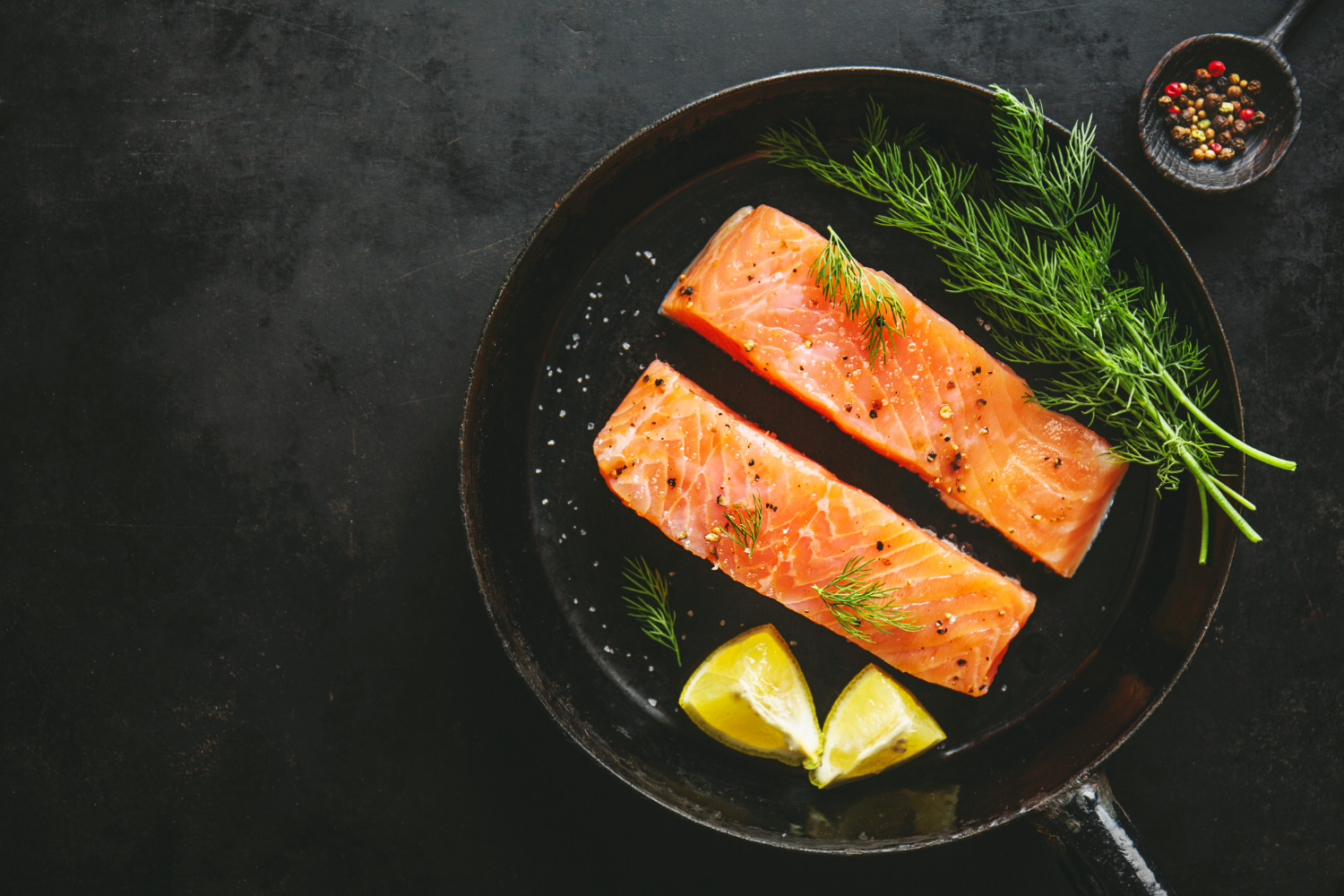
The easiest way to cook salmon is to sear it in a hot skillet and finish it over gentler heat. This method produces a golden exterior while keeping the middle moist and tender.
What You Need
For two servings:
- 2 salmon fillets, approximately 5–6 ounces each
- 1 tablespoon olive oil
- 1 tablespoon butter
- 1 garlic clove, finely chopped
- Salt and black pepper
- Lemon wedges
You will also need a heavy skillet, a fish spatula or thin turner, and preferably an instant-read food thermometer.
How to Prepare Salmon
Remove any visible pin bones with clean tweezers. Pat the fillets thoroughly dry with paper towels, particularly on the skin.
Season both sides with salt and pepper just before cooking. Avoid leaving salted salmon at room temperature for an extended period because the salt can draw moisture to the surface.
How to Cook Salmon in a Pan
- Heat a skillet over medium-high heat for approximately two minutes. Add the olive oil.
- Place skin-on salmon in the pan with the skin side down. For skinless salmon, place the smoothest side down first.
- Press the fillet gently with a spatula for about 10 seconds to prevent curling.
- Cook without moving it for 4–5 minutes. The salmon should appear cooked approximately two-thirds of the way up its sides.
- Turn the salmon once and reduce the heat to medium.
- Add the butter and garlic. Tilt the pan slightly and spoon the melted butter over the salmon.
- Cook for another 2–4 minutes, depending on the fillet’s thickness.
- Check the thickest section with a food thermometer. Stop cooking when the salmon reaches 145°F/63°C, then let it rest for two minutes.
- Finish with a squeeze of lemon and serve immediately.
Salmon Cooking Times by Method
Cooking time depends more on thickness than weight. The following times are estimates for thawed fillets approximately 1 inch thick.
| Cooking method | Temperature | Approximate time | Best feature |
| Skillet | Medium-high, then medium | 6–10 minutes | Crisp exterior |
| Oven | 400°F/200°C | 10–15 minutes | Easy and hands-off |
| Air fryer | 400°F/200°C | 7–10 minutes | Fast with crisp edges |
| Grill | Medium-high heat | 8–12 minutes | Smoky flavor |
Always check the thickest part of the fish rather than relying exclusively on the clock.
How to Tell When Salmon Is Done
A thermometer is the most dependable test. The FDA recommends cooking most seafood to 145°F/63°C. Without a thermometer, the flesh should appear opaque and separate easily when pressed with a fork.
Do not judge salmon only by its pink color. Salmon naturally remains pink after cooking, and its exact color varies by species.
How to Avoid Dry Salmon
Do not cook directly from a wet surface. Excess moisture prevents browning and extends the cooking time.
Do not move the salmon repeatedly. Leave it undisturbed long enough to develop a crust before turning it once.
Do not add butter too early. Butter can burn over high heat. Begin with oil and add butter after turning the salmon.
Do not depend only on cooking time. A thin tail piece can finish several minutes before a thick center-cut fillet.
Serving and Storage
Serve salmon with roasted vegetables, rice, potatoes, pasta, or a simple green salad. Lemon, dill, parsley, garlic, mustard, and honey all pair well with its rich flavor.
Keep raw salmon refrigerated at 40°F/4°C or below and use it within two days of purchase, or freeze it.
Refrigerate cooked salmon promptly in a sealed container. Cooked fish can generally be stored in the refrigerator for 3–4 days.
Frequently Asked Questions
Can I cook salmon without oil or butter?
Yes. Salmon can be baked on parchment paper or cooked in a non-stick pan without added fat. However, a small amount of oil helps prevent sticking and improves browning.
Should salmon be at room temperature before cooking?
It is not necessary to bring salmon fully to room temperature. Taking it out of the refrigerator 10–15 minutes before cooking may help it cook more evenly, but do not leave raw fish unrefrigerated for long periods.
Can I marinate salmon overnight?
It depends on the marinade. Salmon can sit overnight in an oil- or herb-based marinade, but acidic ingredients such as lemon juice or vinegar may soften the flesh if left too long. For acidic marinades, 15–30 minutes is usually enough.
What is the white substance that appears on cooked salmon?
The white substance is albumin, a harmless protein that becomes visible during cooking. Large amounts often appear when salmon is cooked too quickly or for too long.
Is wild salmon cooked differently from farmed salmon?
Wild salmon is usually leaner and may dry out faster. Check it earlier than farmed salmon and avoid relying only on standard cooking times.
Can cooked salmon be eaten cold?
Yes. Properly refrigerated cooked salmon can be served cold in salads, sandwiches, rice bowls, or pasta dishes.